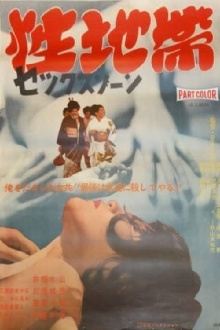
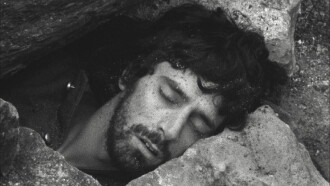
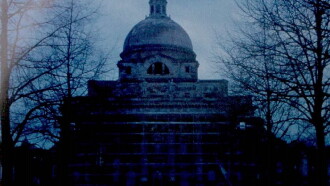
Inspired by the true story of a Geisha murdered in a city famous for its baths, Adachi forged here his favorite style, a kind of conceptual documentary recounting the incident in monotone. The same event that at the beginning of Violated Angels escaped every principle of causality, is portrayed here as a singular anti-spectacle.
Iris, an 18-year old virgin marries Joaquin, a rich widower, because of money. However, when he learns that Iris is not really a virgin, their honeymoon turns to a bloodbath.
It’s coming up to competition time for the pretty office girls of the Kara Cosmetics Company. Kei (Junko Asahina) and her co-workers are preparing their amateur rhythmic gymnastics team for an upcoming competition.
Troublemakers Mok-won, Ryu and Hak-moon are far from passing the state examinations. Three female students enter the school during a new spring term and the atmosphere changes.
A former mistress, an unhappy wife and a frisky female college student meet in a bar. It turns out that they all have developed an interest an eligible doctor.
Documentary by Juan Francisco de Lasa about a pioneer of Spanish cinema. Gelabert attended one of the first sessions of the Lumière's cinématographe in Barcelona.
A Southern soldier in the American Civil War is sent to reconnoiter the enemy positions and becomes trapped beneath a huge pile of rubble by Northern cannon fire.
"In my film I suggest that there is no greater mystery than that of the protagonists. War and Love are simply equated for what they are; the aftermath is inevitable, and a normal human condition, for which like the ancients one can only have pity and understanding.
Centring on the legend of the four ancient Chinese heroines, the film was a novelty for audiences at the time, as the singing performance was in Cantonese and used huangmei operatic rhythms—a popular trend in the 1960s, yet it retained traditional flavours by using operatic luogu percussion in the battle scenes.