Working men and women leave through the main gate of the Lumière factory in Lyon, France. Filmed on 22 March 1895, it is often referred to as the first real motion picture ever made, although Louis Le Prince's 1888 Roundhay Garden Scene pre-dated it by seven years.
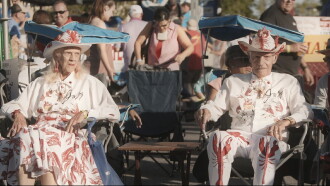
May 2017. As the new President of the United States takes his ease in the White House, the city of Breaux Bridge, Louisiana, is the theatre of the mythic Crawfish Festival.
The short documentary visits the groundhog research center in the Rocky Mountains of Colorado. It was made for Sony Home Entertainment's 15th anniversary edition DVD release of the 1993 film, "Groundhog Day.
A 7-minute portrait of natural born fashion and street photographer 'Jimmy on the Run'. Coming from rural China, he now roams the streets of Amsterdam always chasing the next best picture.
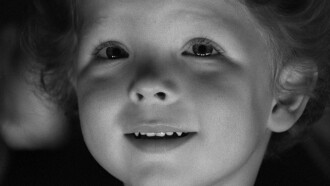
In this ten-minute documentary experiment, director Herz Frank films a group of children watching a puppet show, keeping the camera fixed on their faces in a single continuous shot.
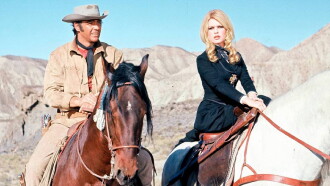
Popular movie trailers from 1968
These some of the most viewed trailers for movies released in 1968:
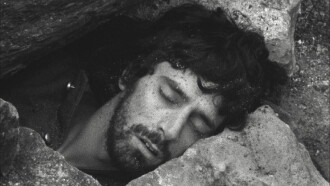
A Southern soldier in the American Civil War is sent to reconnoiter the enemy positions and becomes trapped beneath a huge pile of rubble by Northern cannon fire.
A baleful limping man walks through Prague. He is Asmodeus (Juraj Herz), the fiend of lustfulness, entertaining himself by putting together by magic couples of lovers.
Two young boys, play hooky from school in order to explore an ultramodern world's fair. They take in the many marvelous scientific and industrial exhibits, obtain literature, eat food, and generally run amok.
The Three Kingdoms period begins as the walled fortress of Hsin Yang falls to invaders. Centered around this historical event, The Last Days of Hsin Yang follows the escape of the prince of Hsin Yang as he hides with a small family and escapes from the sacked and burning city.
Centring on the legend of the four ancient Chinese heroines, the film was a novelty for audiences at the time, as the singing performance was in Cantonese and used huangmei operatic rhythms—a popular trend in the 1960s, yet it retained traditional flavours by using operatic luogu percussion in the battle scenes.