A collection of intersecting short stories set in early 1980s Los Angeles, depicts a week in the lives of an assortment of socially alienated, mainly well-off characters who numb their sense of emptiness with casual sex, violence, and drugs.
A psychological thriller about a senior at one of America's most prestigious universities. Under enormous pressure to complete her thesis and earn a top job at one of the world's most competitive consulting firms, Katie is still coping with the sudden unexplained disappearance of her first love two years prior.
A room in a fancy downtown apartment. The evening orgy kicks off with eight men and women meeting for the first time, including an unemployed guy who pays the 20,000 yen party fee with money from his parents, and a female college student whose run-of-the-mill appearance hides a voracious sexual appetite.
Ellie Parker, an aspiring actress from Australia, lives a hectic Hollywood lifestyle, perpetually trying to land the role that will elevate her career.
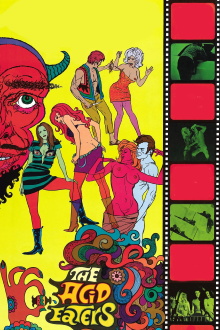
Alternative movies trailers for The Acid Eaters
More movie trailers, teasers, and clips from The Acid Eaters:
The Acid Eaters - Mondopiece Theatre
What would happen if you made the LSD version of Reefer Madness but added bikes and nudity? You'd probably have something better than The Acid Eaters ...
Worst Movies On YouTube #89- "The Acid Eaters" Review
Bird & Gutter review this 60's LSD movie.
The Acid Eaters (1968) Movie Review
Produced by: David F. Friedman.
Popular movie trailers from 1968
These some of the most viewed trailers for movies released in 1968:
There's nothing like a good, opulent, gaudy musical to lift the spirits, but when it's a 1960's Hong Kong musical orchestrated by a Japanese director and composer, it breaks through the ranks as a classic of campy kitsch.
Three identical prints of a single 100 foot fixed-camera take are shown from beginning to end-roll light-flare, with a few feet of blackness preceding/bridging/following the rolls.
Centring on the legend of the four ancient Chinese heroines, the film was a novelty for audiences at the time, as the singing performance was in Cantonese and used huangmei operatic rhythms—a popular trend in the 1960s, yet it retained traditional flavours by using operatic luogu percussion in the battle scenes.