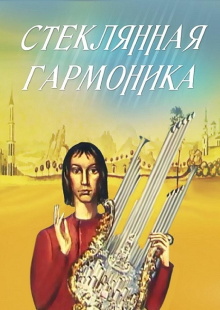
A craftsman builds a glass harmonica that enlightens him. He travels to a town where the people are obsessed with money. A bureaucrat smashes the glass harmonica which leads to chaos and eventually to social reform.
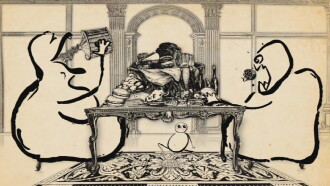
An ogre, it is me it is you : the insatiable hunger devouring the child within us. That request, in some drawings, very simply, what we, the people of ogres, we will do.
The Night had her birthday, and gave a party to which she invited Dima, a little boy so afraid of the dark that he could never sleep when the light was out.
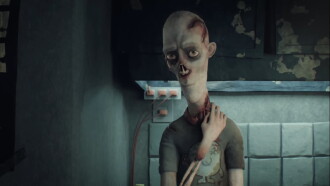
In the aftermath of a zombie outbreak, zombies are cured and exiled to secluded camps. There has been talk about rehabilitating post-zombies back into society.
The film takes place in a strange hierarchical society of rabbits and chickens. From his plot, we can find out the answer to the exciting question, which came first: the egg, the hen, or the rabbit?
This reimagined poem by Sándor Weöres is the story of an ordinary, grey suburban night, which is transformed by love into an exciting series of visions, a sad and dreamy vision.
Alternative movies trailers for The Glass Harmonica
More movie trailers, teasers, and clips from The Glass Harmonica:
The Glass Harmonica (Стеклянная гармоника 1968) by Andrei Khrzhanovsky
The first animated film to be officially banned in Russia.
The Glass Harmonica Trailer
What is it to be ravished by life? To value ecstasy above modesty? The glass harmonica — an instrument so potent it was banned. Chjara Vallé - the woman ...
Andrey Khryanovskiy - The Glass Harmonica (1968) ①
The Glass Harmonica full hd movie trailer.
The Glass Harmonica 1. Bölüm - Andrei Khrjanovsky (1968)
Andrei Khrjanovsky (1968)_Russian Animation.
The Glass Harmonica in LUCIA DI LAMMERMOOR
Learn more about a fascinating instrument! Verrophone player Sascha Reckert and Diana Damrau talk about the glass harmonica in Gaetano Donizetti's LUCIA ...
Popular movie trailers from 1968
These some of the most viewed trailers for movies released in 1968:
Centring on the legend of the four ancient Chinese heroines, the film was a novelty for audiences at the time, as the singing performance was in Cantonese and used huangmei operatic rhythms—a popular trend in the 1960s, yet it retained traditional flavours by using operatic luogu percussion in the battle scenes.