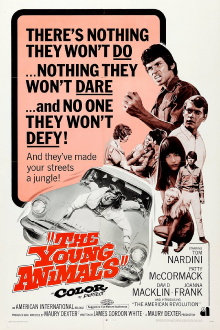
"There's nothing they won't do ... nothing they won't dare ... and no one they won't defy! And they've made your streets a jungle!"01 October 1968Drama100 mins
A small Arizona town is plagued by violence created from the tension between Anglo and Mexican-American youths. Tony is the idealistic new kid in school who tries to alleviate long-time tensions between the rival factions. The Mexican gang is led by Paco, a hot-tempered youth with good reason to resent some of his Caucasian counterparts due to past prejudices. Bruce is the leader of the white gang. Patty McCormack and Joanna Frank are the female interests who become victims of the gang struggles. Tony, formerly from San Diego, attempts to change the attitudes of the polarized and violent groups.
A baleful limping man walks through Prague. He is Asmodeus (Juraj Herz), the fiend of lustfulness, entertaining himself by putting together by magic couples of lovers.
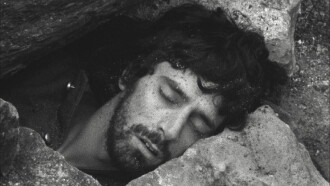
A Southern soldier in the American Civil War is sent to reconnoiter the enemy positions and becomes trapped beneath a huge pile of rubble by Northern cannon fire.
Documentary by Juan Francisco de Lasa about a pioneer of Spanish cinema. Gelabert attended one of the first sessions of the Lumière's cinématographe in Barcelona.
Centring on the legend of the four ancient Chinese heroines, the film was a novelty for audiences at the time, as the singing performance was in Cantonese and used huangmei operatic rhythms—a popular trend in the 1960s, yet it retained traditional flavours by using operatic luogu percussion in the battle scenes.
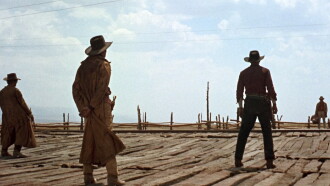
As the railroad builders advance unstoppably through the Arizona desert on their way to the sea, Jill arrives in the small town of Flagstone with the intention of starting a new life.