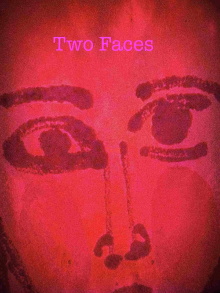
"If you can read a face like a book, then here it is a book of poetry."11 January 1968Animated4 mins
Loose impressionistic brushstrokes sketch a series of portraits of two faces, one male and one female, while the verse on the soundtrack tells the tale of both one and a thousand relationships.
Demmo descends deep into his building's maintenance level in order to restore power to his aprtment. Will he ever finish his Dark Void for Playstation 3 video review?
It is 2046 when a mysterious alien force begins their annihilation of the human race. Leaving behind the one person she loves, Mikako joins the interstellar battle as a pilot.
Enjoy blindsided testimonials from the Crazy 8's, touting the transformative impact Miss Fritter's Racing School has had in reshaping the direction of their lives.
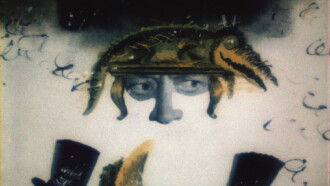
This story is full of images and context, even though it is a simple story about a crocodile that ate a disagreeable man, it turns out that also addresses the problem of property and economic principles.
A pretty shepherdess is in love with a young shepherd. So is a fairy. The shepherdess knows how to look after sheep and dance to the sound of her boyfriend's pipe.
At a lab, the three scientists are attempting to cure a mysterious creature of the unknown sick. With a series of chain reactions, the medical aid becomes emergent.
A modern fairy tale about a girl who is looking for her lost soul. First love, jealousy, death – everything can be found in this fantastic animation movie.
Popular movie trailers from 1968
These some of the most viewed trailers for movies released in 1968:
Anthony Steffen, as a young gunman who works as a circus performer, witnesses the killing of some outlaws, carried out by their leader and is credited with the deed.
There's nothing like a good, opulent, gaudy musical to lift the spirits, but when it's a 1960's Hong Kong musical orchestrated by a Japanese director and composer, it breaks through the ranks as a classic of campy kitsch.
The Three Kingdoms period begins as the walled fortress of Hsin Yang falls to invaders. Centered around this historical event, The Last Days of Hsin Yang follows the escape of the prince of Hsin Yang as he hides with a small family and escapes from the sacked and burning city.
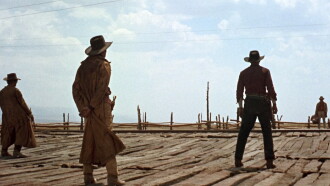
As the railroad builders advance unstoppably through the Arizona desert on their way to the sea, Jill arrives in the small town of Flagstone with the intention of starting a new life.
"In my film I suggest that there is no greater mystery than that of the protagonists. War and Love are simply equated for what they are; the aftermath is inevitable, and a normal human condition, for which like the ancients one can only have pity and understanding.
Comments
Have you watched Two Faces yet? What did you think about it?