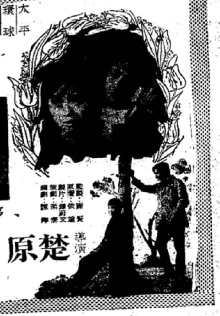
Inside a café, on Christmas Eve. Chim Kei meets an enigmatic woman named Mimi Wong who introduces herself as the daughter of an upper-crust family. But the infatuated writer is struck by a spasm of sorrow when he later sees Mimi make her appearance as a taxi-dancer at a party. The lovers are reconciled by the story of her plight told by her sister Annie. However, Mimi goes missing on the engagement day. By a stroke of luck, Chim runs into the elusive woman again and finds out how she was forced into prostitution by her drug-addict husband, his childhood best friend and benefactor Chan Hung-kit. Chim leaves dejectedly, and has since been idling his days away. The frail Mimi confesses her love for Chim on her deathbed, and from not far away, Chan has ended his own life.
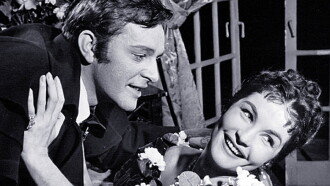
Despite mixed emotions, Frederick Winterbourne tries to figure out the bright and bubbly Daisy Miller, only to be helped and hindered by false judgments from their fellow friends.
Ah Hing is made pregnant by her master Fan Chun-kit. Fan soon leaves for his studies overseas while Ah Hing suffers gross prosecution and is reduced to becoming a prostitute.
Lau Mung-mui chances on To Lai-leung and their encounter transcends to a rendezvous in their dreams. They admire each other, but they do not know each other's names and addresses.
Songstress Mui Yee-wah falls head over heels for painter Wai Tik-fung despite their age difference. Because Wai is a married man, Mui's mother is against the match.
Lee Sun-fung is renowned for adapting literary classics for the silver screen. To commemorate the seventh anniversary of the Union Film Enterprise known for producing quality films and co-founded by Lee, Human Relationships is adapted from writer Ba Jin's novel into film.
"Family" (1953), which launched the Union Film legacy, "Spring" (1953) and "Autumn" (1954) are adaptations of Ba Jin's highly regarded novel "Torrent Trilogy".
A baleful limping man walks through Prague. He is Asmodeus (Juraj Herz), the fiend of lustfulness, entertaining himself by putting together by magic couples of lovers.
Five criminals are arrested after a bank-robbery. One escapes, and the police officer in charge of transporting them arrests a new person at random to cover up for his negligence.
Three identical prints of a single 100 foot fixed-camera take are shown from beginning to end-roll light-flare, with a few feet of blackness preceding/bridging/following the rolls.
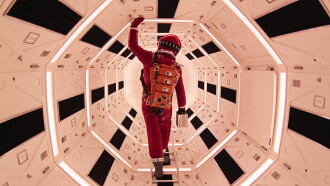
Humanity finds a mysterious object buried beneath the lunar surface and sets off to find its origins with the help of HAL 9000, the world's most advanced super computer.
The Three Kingdoms period begins as the walled fortress of Hsin Yang falls to invaders. Centered around this historical event, The Last Days of Hsin Yang follows the escape of the prince of Hsin Yang as he hides with a small family and escapes from the sacked and burning city.