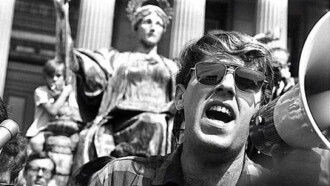
In 1969, the Renovación Universitaria movement and the subsequent raid on the Central University of Venezuela by the government of Rafael Caldera, triggered a strong wave of protest in the Institutes of Higher Education in Venezuela. This documentary collects part of the events that took place in the city of Mérida, Mérida State, where the University of the Andes is located.
A montage film that begins in May 1, 68 and ends in mid-June. Everything is there: the students of Nanterre in revolt, the demonstrations, the cobbles, the barricades, the rioting nights, the busy Sorbonne, the happening of the Odeon, the factories on strike and Séguy who gets on the bandwagon , the general protest, 10 million French without work, de Gaulle and The reform, yes, the doglit, no, the Gaullist demonstration of May 30, Grenelle, the death of a high school student, the offensive Pompidou and the return in the factories.
Refuge(e) traces the incredible journey of two refugees, Alpha and Zeferino. Each fled violent threats to their lives in their home countries and presented themselves at the US border asking for political asylum, only to be incarcerated in a for-profit prison for months on end without having committed any crime.
In April 1968, black and white students rebelled against the university administration, occupying five buildings, including the president's office in one of the first campus revolts of the Civil Rights/Vietnam War era.
Paris, Latin Quarter, May 1968. Images of barricades and police movements in the street. In his bedroom, on his bed, a young man indulges in daydreams that invade the whole space.
Popular movie trailers from 1969
These some of the most viewed trailers for movies released in 1969:
Neena lives a poor lifestyle along with her parents. Her marriage is arranged with a wealthy male, but the marriage could not take place as her parents are unable to provide enough dowry.
Dr. Roth, a respected veterinarian and head of a state-owned stud farm, had accepted papers from a man for safekeeping when he was 16 years old, toward the end of the war.
The legendary swords-girl Little White Dragon, helps protect a crown prince on his journey to a far off temple where he is to be blessed before becoming a Prince.