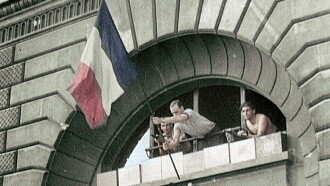
Near the end of World War II, General Dietrich von Choltitz receives orders to burn down Paris if it becomes clear the Allies are going to invade, or if he's unable to maintain control of the city.
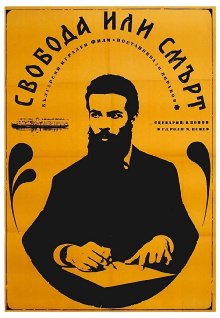
This is a film about the moral and philosophical sides of the life and the art, about the complex relations between the artist and the rough rules of the time in which he lives.
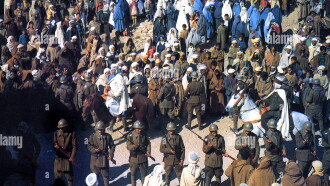
Collectively directed by the members of the Centre audiovisuel d'Alger at Ben Aknoun, the film traces, in two parts, Algeria's recent history, from colonial repression to the birth of the National Liberation Army, and the country's postwar reconstruction, framed in sympathy with the socialist project of Ahmed Ben Bella's government.
The great Bulgarian football player Georgi Asparuhov and his greatest love - his wife Lita go through a number of trials of life, football and the political system.
The feature film “The seven ramparts of the citadel”, a fiction recounting the conflict between an Algerian family expropriated from its land and a bloodthirsty settler; by director Ahmed Rachedi.
A meticulous chronicle of the evolution of the Algerian national movement from 1939 until the outbreak of the revolution on November 1, 1954, the film unequivocally demonstrates that the "Algerian War" is not an accident of history, but a slow process of suffering and warlike revolts, uninterrupted, from the start of colonization in 1830, until this "Red All Saints' Day" of November 1, 1954.
A student, tired of a too well-mannered fiancé, loses a virginity she considers very embarrassing in the arms of a forty-year-old man, before finding love with a repentant gigolo.
When Korea Highway Corporation is about to destroy the grave of O Gong-nyeo, the locals oppose the idea because they are worried of the legend of the grave.
A balladic story based on the motifs of M. Urban's short story, in which the arduous work of loggers and the harshness of the environment interlace with the poetry of the Slovak mountains.
Dr. Roth, a respected veterinarian and head of a state-owned stud farm, had accepted papers from a man for safekeeping when he was 16 years old, toward the end of the war.
A farmer receives land from the king and discovers a buried golden mortar. He decides to give it to the king out of gratitude, but his clever daughter warns him that the king will surely want him to bring a corresponding pestle as well.
Comments
Have you watched Liberty or Death yet? What did you think about it?