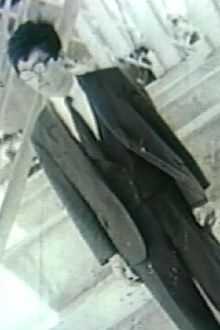
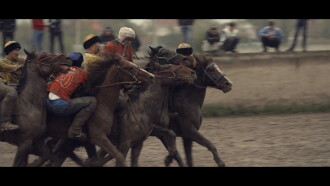
The Meaning of 1/24 Second is Korea's first experimental film and was filmed in 1969. This 16mm film in color and black and white is composed of hundreds of inconsistent scenes. Taking the basic structure of the film, which consists of 24 frames per second, The Meaning of 1/24 Second expresses the steep reality faced by modern man, and the sense of alienation that comes from uncontrollable speed. The video file that remained only in digital format since it went missing in 2001 was restored to 16mm film for screening for his retrospective exhibition , which has been held at Seoul Museum of Art, Republic of Korea in 2013, thus providing an opportunity to look back on its meaning.
As the only work in this medium by Richter, the film was created for the exhibition Volker Bradke that took place on 13th December 1966 at Galerie Schmela in Düsseldorf.
Itzanamí, a young woman, is facing stormy relationships. In his attempt to discover himself, he creates a documentary, wondering why he associates love with violence.
The Colours of My Father: A Portrait of Sam Borenstein is a 1992 short animated documentary directed by Joyce Borenstein about her father, the Canadian painter Sam Borenstein.
What is it about Speedos? Well here Australian director Tim Hunter is on a mission to find the answer to the question of why so many gay men can't seem to get enough of hunks in tight fitting trunks? Although somehow I think the answer can be found in the question! Anyway in a bid to discover the truth, Hunter has carried out a series of interviews with men who have more than a passing interest in this briefest of garment, including that of Speedo designer Peter Travis, who here relates his part in the history of 'the male equivalent of the Wonder Bra.
This film features some of the most important living Postmodern practitioners, Charles Jencks, Robert A M Stern and Sir Terry Farrell among them, and asks them how and why Postmodernism came about, and what it means to be Postmodern.
Naomi Kawase observes people in the city of Shibuya with curiosity and openness, drawing parallels between life and filmmaking and discovering her abilities as a filmmaker.
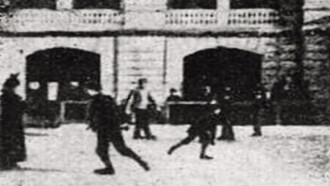
The film was about a group of Polish ice skaters at the slide of the Warsaw Ice Skating Society. The film was filmed using a pleograph which was an early type of the movie camera invented by Kazimierz Prószyński.
While happily engaged to Rosalia, Tony has the misfortune of falling for a vibrant pilot named Valeria — and that’s just the beginning of his problems.
Neena lives a poor lifestyle along with her parents. Her marriage is arranged with a wealthy male, but the marriage could not take place as her parents are unable to provide enough dowry.
Comments
Have you watched The Meaning of 1/24 Second yet? What did you think about it?