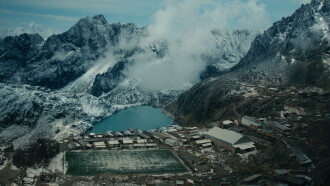
Bolivia after Chen begins in medias res, with a long shot filmed atop a truck traveling up the Bolivian mountains to transport tin miners. It is a place where union organizing is prohibited, and where women and men, sometimes even children, can work up to 24 hours a day. This was the situation in the mines until the fall of 1969, when a socialist military coup shook the country. The question of whether the situation would really change is what Lindqvist explores in his film.
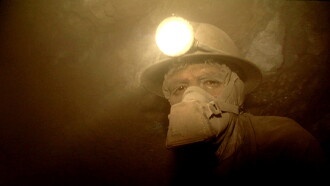
Danger, toil, and superstition pervade life in a mining town high up in the Bolivian mountains. Tin is the heartbeat of the community providing jobs and livelihoods - but at considerable cost.
'The Devil's Miner' tells the story of 14-year-old Basilio who worships the devil for protection while working in a Bolivian silver mine to support his family.
In December of 2002, McDonald's had to shut down their restaurants in Bolivia. The company cited financial problems, but the real reasons were to be found elsewhere.
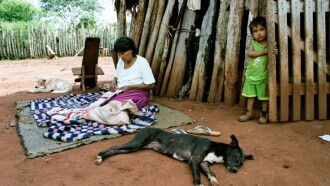
In 1946, a group of Latvian Brazilian Baptist missionaries arrived to Rincon del Tigre (“Jaguar’s Corner”), in the backwoods of Bolivia, to preach God’s word to the Ayoreo Indians.
2006: Evo Morales, first indigenous President is elected in Bolivia after the 2003 dramatic events following the fall of the President Sanchez de Lozada (exiled in the U.
Critical investigation of The World Bank and IMF. Too hot for PBS, but prime time TV everywhere else. Do the World Bank and IMF make the poor even poorer?
The story of a poor girl who leaves her starving family and sheep for a more prosperous village. Her grandfather finds her and tries to convince her to return to her home.
Follows contemporary American poet James Dickey on a three week lecture tour. Reveals the actual thoughts and feelings of the poet through his conversations and poetry readings.
At least forty films have been made about the Living Theatre; it remained to the American underground filmmaker Sheldon Rochlin (previously responsible for the marvellous Vali) to make the 'definitive' film about one of the most famous of their works, Paradise Now, shot in Brussels and at the Berlin Sportpalast.
Two sisters, Hanifah and Latifah/Ipah have different attitudes toward life in Jakarta. While Hanifah is content working as a teacher, Ipah, who works as a shopkeeper, is obsessed with living a high life.
The world is divided into factions, on opposite sides of issues; each side is, of course, right. And so the gap between the people grows, until someone challenges the absolutist view of what's "right.
"Canada's convention-shattering voice of poetry" (Globe and Mail). Michael Ondaatje documents the work and spirit of fellow poet bpNichol (1944-1988) Capturing the artist / writer / sound performer in "fantasy documentary", Ondaatje uncovers what made bpNichol an influence to a generation of North American and European writers.