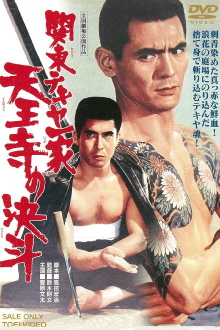
The third film in the Kanto Street Peddlers series. Sugawara still plays the same Kanto street peddler, who this time ventures to Osaka where he defends a blind girl at a street market. The area is targeted by rotten yakuza (Asao Koike and Tatsuo Endo), who have lured local senior female boss (Nijiko Kiyokawa’s) rebellious but not entirely indecent son Goro Ibuki to their side.
A retrospective of events in director Louis van Gasteren’s life from 1964 to 1969, filmed by him in that period and reflected on from his vantage point over 40 years later at the age of 90.
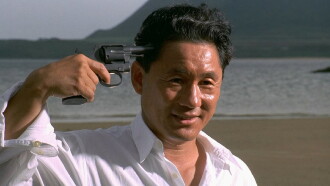
Murakawa, an aging Tokyo yakuza tiring of gangster life, is sent by his boss to Okinawa along with a few of his henchmen to help end a gang war, supposedly as mediators between two warring clans.
Sue Gordon, a mountain girl on the Tennessee side of the Cumberlands, lives with her grandmother. When "Granny" dies, Sue--fulfilling Granny's dying wish--goes to Chicago to live with John Peyton, an industrialist who was at one time Sue's mother's fiancé.
U.S. Navy Lieutenant George Blenton becomes drunk at an official reception, and his fiancee, Jane Ravenslee, the captain's daughter, breaks their engagement.
The history of the Yakuza Eiga at the TOEI studio is roughly outlined. Real Yakuza and also their connections to the movie business are discussed, and many important actors and directors of the genres are interviewed.
Popular movie trailers from 1970
These some of the most viewed trailers for movies released in 1970:
At least forty films have been made about the Living Theatre; it remained to the American underground filmmaker Sheldon Rochlin (previously responsible for the marvellous Vali) to make the 'definitive' film about one of the most famous of their works, Paradise Now, shot in Brussels and at the Berlin Sportpalast.