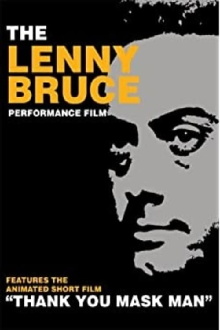
This short animation set to Lenny Bruce's live monologue tells how the Lone Ranger hooks up with Tonto. With Bruce doing all the voices, this animation begins with local folks upset at the Lone Ranger because he won't stay around to be thanked after a good deed. So, he stays and finds he likes hearing "Thank you mask man." When their attention starts to shift elsewhere, he shocks and disgusts the townspeople with a final request. According to the cartoon’s producer John Magnuson, at early showings of this, gay audiences were upset by its apparent “fag-bashing”. And it’s true, part of the fun of the piece is just crying out “Masked man’s a fag”, scandalising and defacing the image of this all-American hero. But it’s within the larger context of Bruce’s analysis of heroism, and that the towns people reject the Masked Man is because of their prejudices, not because Bruce is asking us to endorse them. (from: http://ukjarry.blogspot.de/2010/01/352-lenny-bruce-thank-you-mask-man.html)
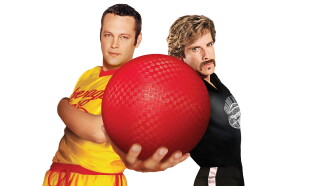
When megalomaniacal White Goodman, the owner of a trendy, high-end fitness center, makes a move to take over the struggling local gym run by happy-go-lucky Pete La Fleur, there's only one way for La Fleur to fight back: dodgeball.
In this feature film based on the hit animated series, the third graders of South Park sneak into an R-rated film by ultra-vulgar Canadian television personalities Terrance and Phillip, and emerge with expanded vocabularies that leave their parents and teachers scandalized.
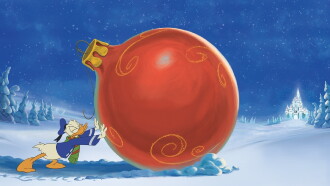
In Donald Duck’s Christmas Favorites you’ll be treated to some of the best and most hilarious cartoon shorts from the days when Walt Disney himself added his magical touch to each film.
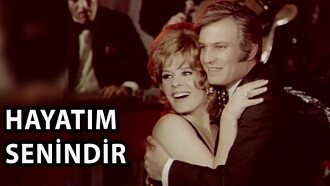
Leyla and Murat are two artists who go from success to success on stage and on set. The only thing that overshadows their love is Leyla's ex-boyfriend, who is pursuing her.
Jai, the orphaned boy adopted by the Monkey Man, helps missionary Charity Jones bring an organ to a friendly tribe, but they are captured by hostile natives.
This period compilation of documentaries shot with a Portapak camera from the early era of video experimentation offers an immediate view of the independent New York art scene (concerts and theater perfomances on the streets and in the clubs of downtown).
Television movie that consists of two episodes from the UK TV series Journey to the Unknown (1968): Do Me a Favor and Kill Me (1968) and The Killing Bottle (1969).
An educational film about an aspect of political economy. The concepts of use value, barter value and labor as a commodity are the subjects; they are intended to introduce the process of understanding the theory of value of work and the law of values, alienation and fetish.