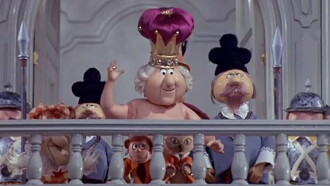
Backbone Trailer (1972)
01 January 1972 11 mins
Backbone is an essay on structures and metaphors of war, mechanization, dehumanization. It reveals not a paralysis of "guilt" but a reaction (against horror) that asserts itself through command of language. The premise that Braidwood employs is related to the leftist strategy "which asserts that what people believe, and thus the way they will behave, can be changed by the very form of the way in which they are represented," a formalism expressed in the Soviet publication of the twenties, Novy Lef Lef.
Watch the official Backbone 1972 trailer in HD below or find more Backbone videos on Vidimovie.