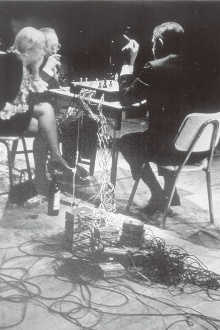
In elegiac work, Kubota explores the relationship between two of the most influential figures in 20th century art and music. The core images are Kubota's own photographs of the famous 1968 chess match between Marcel Duchamp and John Cage, in which the board, wired for sound, functioned as a musical instrument. Recordings of Cage's compositions accompany the stills and video footage, which Kubota electronically processes to abstraction.
Paul, a former womanizer, marries the head of the medical department's "unattractive" daughter Christine because he thinks attractive women can't be trusted and make poor wives.
The film by Brakhage commonly referred to as "Wecht" does indeed exist. It doesn't have a titlecard at the head, and the leader of the original is labeled "Portrait" in Stan's handwriting, so I'm not sure where the 'Wecht' title comes from.
A guardian angel agrees to help Willie Mays win the National League Pennant if Mays agrees to take care of Veronica, a lonely, mischievous orphan girl.
A dramatised documentary which explores ghetto life as seen and felt inside Harlem, based on experiences of the Northside Centre for Child Development.
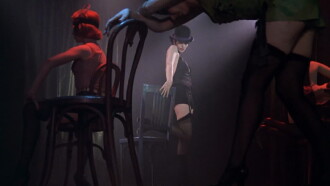
Inside the Kit Kat Club of 1931 Berlin, starry-eyed singer Sally Bowles and an impish emcee sound the clarion call to decadent fun, while outside a certain political party grows into a brutal force.
In a French seaside town, at a boarding house for civil servants recovering from surgery and maladies, the six male residents' lives change dramatically when two women arrive: Catherine, lively, sexually liberated, willing to kiss, dance, and sleep with the men, and Leonie, reserved, formal, conservative.