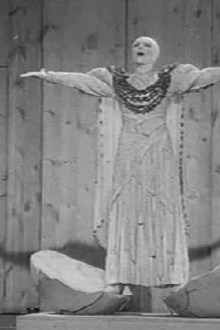
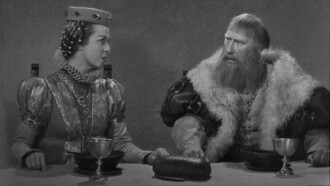
The story of the “Oresteia” begins with King Agamemnon's return to Argos after the fall of Troy. The chorus, composed of old Argives, recalls the sacrifice offered to the gods by Agamemnon, in Aulis, of his daughter Iphigenia to gain their favor.
Axel and Bertha are a married couple who are both artists in 1880s Paris, the film addresses the topic of gender equality in marriage and society, for example the property rights of married women.
Kristian Smeds's sensational debut at the National Theater. Smeds's adaptation of Väinö Linna's The Unknown Soldier had a powerful impact even on those who had not seen the play.
Popular movie trailers from 1972
These some of the most viewed trailers for movies released in 1972:
An adventure story for children set in New Zealand and told in eight sequential episodes. 5 of 8: The escaped criminals drive away from Wellington in a stolen car.
Doc Saxon and his gang rob the Crown City bank but are double-crossed by Carrasco, a Mexican bandit, who steals the gold and leaves Doc and Donovan with nothing.
The film by Brakhage commonly referred to as "Wecht" does indeed exist. It doesn't have a titlecard at the head, and the leader of the original is labeled "Portrait" in Stan's handwriting, so I'm not sure where the 'Wecht' title comes from.
A dramatised documentary which explores ghetto life as seen and felt inside Harlem, based on experiences of the Northside Centre for Child Development.
"A family of Polish immigrants has a difficult time adjusting to life in the United States. The story centers on the son, named Janek, who has trouble fitting in at school and with his family.