
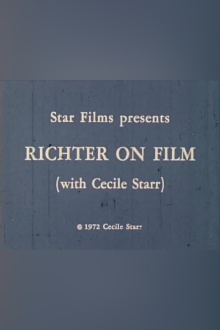
Shot on a September afternoon, in 1971, on the lawn and inside the studio of Hans Richter's Connecticut home. The artist talks informally with Cecile Starr about his first experiences as a filmmaker, and about the interrelationship of his films and his paintings, scrolls and collages. Excerpts from Rhythm 21, Ghosts before breakfast and Race symphony help illustrate Richter's comments about how these pioneer avant-garde films were made in the years between 1921 and 1929.
Young adventurer Gipo owns one fifth of a rock illustrating the location of a rich gold mine. Risking his life more than once and with the help of the beautiful hooker, Lulu Belle, our hero sets out to recover the missing pieces.
After having challenged the German Ottone to single combat for the hand of Leonza, the bishop's niece, the valiant knight Anselmo da Montebello, leaves for Rome where he must deliver a precious relic to the Pope and obtain a sum of twenty-thousand crowns in order to participate in the third crusade in the Holy Land.
Hopelessly inept clod Finster Fahrquart desperately tries to get into the swing of the 70's sexual revolution and figure out a way to succeed with the ladies.
A guardian angel agrees to help Willie Mays win the National League Pennant if Mays agrees to take care of Veronica, a lonely, mischievous orphan girl.
Jack White throws a big party at which many of the artists he has produced perform. He has had an eventful life in which he has always remained true to his ideals, first as a footballer, then as a pop singer and then as a producer, even in the face of fierce opposition from others.
Doc Saxon and his gang rob the Crown City bank but are double-crossed by Carrasco, a Mexican bandit, who steals the gold and leaves Doc and Donovan with nothing.
“It’s not how it used to be.” The words of Cézar Néwashish resonate throughout this short documentary that explores the history of the Atikamekw community of Manawan, Quebec.
Comments
Have you watched Richter on Film yet? What did you think about it?