South Yemen, the Cuba of the Arab World Trailer (1972)
01 January 1972
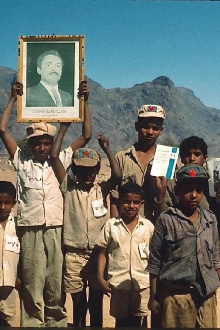
During the liberation struggle two organisations, the FLOSSY and the NLF, were fighting against the British occupation troops. Mainly the petit bourgeoisie and trade unionists from the Crown Colony of Aden supported the FLOSSY. The leadership of the NLF came from the rural areas and had the support of the peasants and the tribes. Although the NLF had liberated large tracts of the country, it did not seem to stand a chance in the decisive battle for Aden. However, the NLF won and took over the administration in the areas that had been formerly occupied by England. The film is about this revolution. lt shows how land reforms were implemented and describes the effort to find an economically self-supporting and politically independent system. Later, South Yemen came totally under the control of the Soviet Union. The German Democratic Republic was in charge of the political police and the dream of an independent revolution evaporated – as it did in Cuba.
Watch the official South Yemen, the Cuba of the Arab World 1972 trailer in HD below or find more South Yemen, the Cuba of the Arab World videos on Vidimovie.