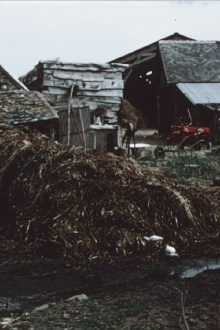
TI-PRI (The Mud House, 1972) is a poetic homage to subsistance farming in Brittany and at the same time a militant warning against the loss of Breton culture and language. When the film screened in Oberhausen in 1973, resistance against the oppression of minority languages and cultures within centralized France was at its peak. TI-PRI was director Philippe Cassard's first film.
Delia Peletier has been paid to have a child for a wealthy man who wants an heir. She has the baby and turns it over to her "employer," but subsequently decides she wants the child back.
After a peaceful sailboat ride, four young people, including rich kid Bill, Joe, Fred and Jane, knock on the door of a secluded villa after their dune buggy runs out of gas.
A frustrated Frankfurt innkeeper is recruited as an agent for the "Gehlen Organization" and after a short training period, during which he is familiarized with sophisticated espionage methods, he takes his first steps as a spy.
Jack White throws a big party at which many of the artists he has produced perform. He has had an eventful life in which he has always remained true to his ideals, first as a footballer, then as a pop singer and then as a producer, even in the face of fierce opposition from others.
In a French seaside town, at a boarding house for civil servants recovering from surgery and maladies, the six male residents' lives change dramatically when two women arrive: Catherine, lively, sexually liberated, willing to kiss, dance, and sleep with the men, and Leonie, reserved, formal, conservative.