Reportedly shot in the back office at Leo Castelli’s New York gallery, an ashtray is used to demonstrate five different actions related to artistic work. With the camera static, the video opens with the ashtray in the center of the screen. A hand approaches from above and slides the object up and down, then back up and back down. Each time an act is completed, the hand retreats from the object, marking a separation from the next “possibility.” The actions (or movements) mimic language (e.g. “to and fro”) as it is spoken.
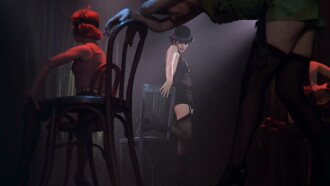
Inside the Kit Kat Club of 1931 Berlin, starry-eyed singer Sally Bowles and an impish emcee sound the clarion call to decadent fun, while outside a certain political party grows into a brutal force.
Paul, a former womanizer, marries the head of the medical department's "unattractive" daughter Christine because he thinks attractive women can't be trusted and make poor wives.
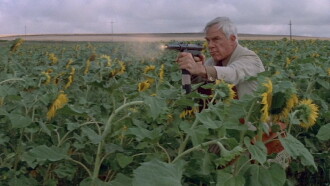
A group of ruthless Chicago mob enforcers are sent to Kansas City to settle things with the owner of a slaughterhouse who has taken money that is not his to keep.
In a French seaside town, at a boarding house for civil servants recovering from surgery and maladies, the six male residents' lives change dramatically when two women arrive: Catherine, lively, sexually liberated, willing to kiss, dance, and sleep with the men, and Leonie, reserved, formal, conservative.
Young adventurer Gipo owns one fifth of a rock illustrating the location of a rich gold mine. Risking his life more than once and with the help of the beautiful hooker, Lulu Belle, our hero sets out to recover the missing pieces.
The film by Brakhage commonly referred to as "Wecht" does indeed exist. It doesn't have a titlecard at the head, and the leader of the original is labeled "Portrait" in Stan's handwriting, so I'm not sure where the 'Wecht' title comes from.
"A family of Polish immigrants has a difficult time adjusting to life in the United States. The story centers on the son, named Janek, who has trouble fitting in at school and with his family.