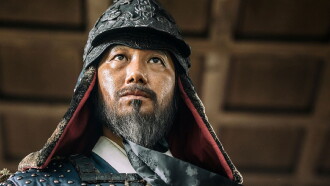
A woman evil appears to a Japanese feudal lord Mori and kills his son and kidnaps his daughter. He follows the evil but the evil's trick leads his daughter to be killed. Wounded Mori meets a monk who saves him. During Toyotomi invasion long time ago, Mori turned down his staff's advice to attack Korean commanders and woman evil. His men and villagers leave town to avoid the evil. Mori kills his wife by mistake while he runs after that evil. As the monk who knows everything comes to him, Mori admits regretting his faults and leaves for Korea to make sacrifice.
Admiral Yi Sun-sin faces a tough challenge when he is forced to defend his nation with just 13 battleships against 300 Japanese enemy ships in the Battle of Myeongryang.
The Imjin War reaches its seventh year in December of 1598. Admiral Yi Sun-shin learns that the Wa invaders in Joseon are preparing for a swift withdrawal following the deathbed orders of their leader Toyotomi Hideyoshi.
A young Japanese actress remembers her war childhood in Korea. Her father goes to fight, her baby sister Miko dies of typhoid, her beloved Korean maid Ohana is fired due to a mistake which could cost Chiko her life.
This Spanish-Italian co-production tells the story of a man who feels deep guilt for the death of his wife: he, an alcoholic, is convinced that he accidentally caused her fatal fall in their house while he was drunk.