A film demonstrating steps to take in the event of a nuclear attack. Animated drawings show the effects of atomic explosions in the air and at ground level. How wide an area is affected by light and heat flash, radiation and radioactive fall-out are clearly illustrated. How to build or improvise a fall-out shelter, what to stock in it, when to take shelter and how long to stay there are similarly explained. Produced by the National Film Board of Canada for Emergency Planning Canada.
Portrays the challenges of creating a film about nuclear disaster amid public apathy. It captures behind-the-scenes moments as the crew discusses the gravity of nuclear threats, the importance of preparation, and the emotional impact of a nuclear attack.
This programme recalls the events that led up to one of the most dangerous moments in the entire history of the Cold War: a NATO command post exercise, code named Able Archer 83, which caused the USSR to believe that NATO was planning a genuine nuclear attack.
Since 1950, there have been 32 nuclear weapon accidents, known as "Broken Arrows." A Broken Arrow is defined as an unexpected event involving nuclear weapons that result in the accidental launching, firing, detonating, theft or loss of the weapon.
A disturbing collection of 1940s and 1950s United States government-issued propaganda films designed to reassure Americans that the atomic bomb was not a threat to their safety.
Peter Ustinov hosts this haunting 1980 documentary exploring the world's nuclear weaponry and the fragile system that deters either side from initiating the first nuclear strike.
During the Cuban Missile Crisis of 1962, Soviet Navy officer Vasily Arkhipov refused to launch a nuclear strike and saved the world from nuclear war and total destruction.
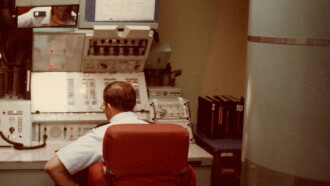
Follow the 4315th Training Squadron of the Strategic Air Command at Vandenberg Air Force Base in California, where officers are trained to man the Launch Control Centers for the Minuteman Intercontinental Ballistic Missiles.
A documentary film about the effects of nuclear weapons. What would be the effects on people and buildings if one medium-sized nuclear bomb was dropped on a large city? How effectively would various types of shelter protect us? In an experimental trial, two couples live in fallout shelters for ten days each.
An archive-based feature documentary viewing the dramatic climax of the Cold War through the lens of the ABC network, as it narrowly succeeds in producing the most watched, most controversial made-for-TV movie, THE DAY AFTER (1983).
We've all heard of the atomic bomb, but in the late 1950s, an idea was conceived of a bomb which would maximize damage to people, but minimize damage to buildings and vital infrastructure: perfect for an occupying army.
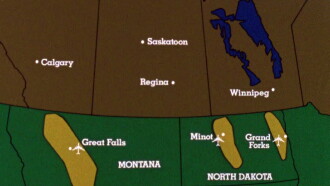
This film deals straightforwardly with the consequences of a nuclear attack for the Canadian Prairies due to their proximity to intercontinental ballistic missile sites in North Dakota.
Popular movie trailers from 1973
These some of the most viewed trailers for movies released in 1973:
A couple is suffering from sexual estrangement. The husband is having an affair with his secretary and the wife takes up with Sandra an interior decorator.
Don Serafin has a complex: to all the beautiful women always seen with a beard. To remove the complex and try to cure him, his friends will lead to Biarritz.
The Sienese Pia Tolomei is imprisoned in a castle by a jealous husband. Based on the novel by Marguerite Yourcenar, inspired by a story from the Italian Middle Ages.