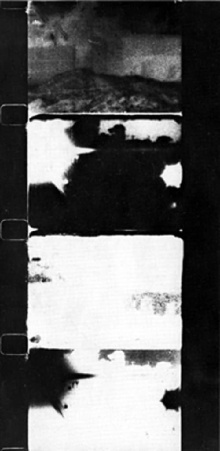
This work produces complex flicker patterns by splicing together four types of footage, consisting of shots of the exterior of a factory during the day and at night, in positive and negative versions. Nakai created a masking film with a calculated pattern of black and white frames into which he inserted positive and negative images and made a print out of two separate rolls of film. “Images of an industrial zone in constant operation day and night are utilized with the sense that it encapsulates both the beginning and the end. Scenes shot from morning to evening and then from evening to morning are divided into negative and positive frames, resulting in four types of images that intersect, manipulating the effects of film processing on perception.” (Tsuneo Nakai)
Two versions of the film exist: 13:40 mins at 24 fps and 20 mins at 16 fps.
Shanta Dhamle lives a wealthy lifestyle in Bombay along with her dad, Shamrao, and mom, Ansuya. She incurs their displeasure when she falls in love and gets married to a poor and overly sensitive writer, Gopal, who moves in with them, and continues to suffer verbal abuse at Shamrao's hands.
The story of a peasant whose harshness and bluntness only provoke disputes and anger, and his honesty and sense of truth and honor in conjunction with the previous qualities only exacerbate these disputes.
The story of the last days of Austrian farmer Franz Jägerstätter (1907-43), who was executed by the Nazi regime because of his refusal to compromise with a perverse system.
It is 1905. The police director gets Jindrich Legenda (Eduard Cupák) shadowed as, yet Legenda had served his sentence for a burglary, the jewels have not been found.
Abel Hradscheck, the owner of an inn in the Oderbruch country, faces financial ruin. For this state of affairs, Ursula, his wife and former actress, is by no means free of blame.
Comments
Have you watched Azoth yet? What did you think about it?