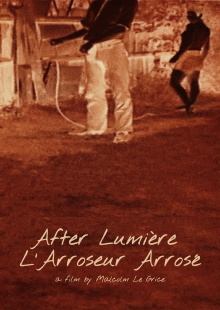
"Like all the works I have done which refer directly to another artist, After Lumière… is not directly 'about' the Lumière original. It is the starting point for an investigation. In this case it is an investigation into consequentiality, or at least the significance of sequentiality in the construction of meaning and concept. As such, the film encroaches on 'narrative' cinema, but in a way which treats narrativization as problematic, not transparent." - Malcolm Le Grice
Five friends head out to rural Texas to visit the grave of a grandfather. On the way, they stumble across what appears to be a deserted house, only to discover something sinister within.
A couple of musicians are on their way to a show at a country bar. Along the way, they pick up a couple of sexy hitchhiking ladies and decide to pull over for a pitstop.
Portrays the challenges of creating a film about nuclear disaster amid public apathy. It captures behind-the-scenes moments as the crew discusses the gravity of nuclear threats, the importance of preparation, and the emotional impact of a nuclear attack.
John Pilger returns to Vietnam in 1974. America had withdrawn its ground forces at the beginning of the previous year, he reports, yet the war had not ended.
Following Tung's death in a mysterious plane crash, a police investigator replaces him to investigate the shady dealings of a gang of criminals led by Feng Wei, cousin of the dead.
Allied to a four-year Daily Mirror campaign by John Pilger that helped achieve compensation for many of the forgotten and mostly working class victims of the notorious drug prescribed to women during pregnancy.
A collage film, a dialogue between mother and the unborn child, the film can be seen as a personal self-analysis by René Paquot, who dreamily delivers his conflicts with maternal, medical and religious authority.
Comments
Have you watched After Lumière – l'Arroseur arrosé yet? What did you think about it?