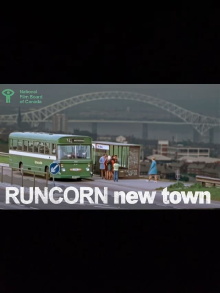
Great Britain was the first country to plan the establishment of 'new towns' to house the overflow from rapidly expanding industrial centres. Today these towns number over one hundred. This film examines the operation of two of them.
In 1959 New York City announced a "slum clearance plan" by Robert Moses that would displace 2,400 working class and immigrant families, and dozens of businesses, from the Cooper Square section of Manhattan's Lower East Side.
Sundance award-winning director Julia Kwan’s documentary Everything Will Be captures the subtle nuances of a culturally diverse neighbourhood—Vancouver’s once thriving Chinatown—in the midst of transformation.
The war zone of a dystopian multiplayer shooting game is used to embark some urban explorers on a winter walk, avoiding the combats whenever possible, as peaceful observers, inhabitants of a digital world, which is a detailed replica of Midtown Manhattan.
In the city of Saskatoon, Saskatchewan, an effective government policy of controlling land investment prevents speculation, keeps land prices down, and provides a good balance between commercial, residential and public areas.
Just a stone’s throw from downtown Montreal is the largest social housing complex in Quebec. Built in 1959 where the red-light district used to be, Les Habitations Jeanne-Mance have retained something of the area’s seedy reputation for poverty, prostitution, drugs and violence.
Portrays the challenges of creating a film about nuclear disaster amid public apathy. It captures behind-the-scenes moments as the crew discusses the gravity of nuclear threats, the importance of preparation, and the emotional impact of a nuclear attack.
Directed by Sam Pillsbury, this 1974 film observes Ralph Hotere — one of New Zealand’s greatest artists — at a moment when excitement is gathering about his work.
On a beach in Nice, François meets the mysterious Peggy and falls in love with her. Following her to a villa, he meets Marc, a lawyer who has a strange relationship with the girl.