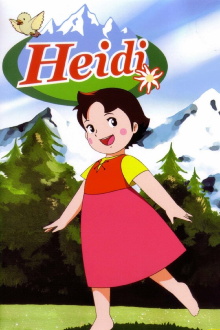
Heidi (1974) Japanese anime series by Zuiyo Eizo (now Nippon Animation) based on the Swiss novel Heidi's Years of Wandering and Learning by Johanna Spyri (1880). It was directed by Isao Takahata A feature-length film Heidi in the Mountains, aka The Story of Heidi, was edited from the series by Zuiyo (which by then was a separate entity from Nippon Animation, which employed many of the TV series' animation staff) distributed in 1979. All cast were replaced excluding Heidi and the grandfather. This movie is also the only incarnation of the Heidi anime to have been released commercially in the United States in English (on home video in the 1980s). Isao Takahata remarked "Neither Hayao Miyazaki nor I are completely related to any shortening version" on this work.
One year after their incredible adventures in the Lion, the Witch and the Wardrobe, Peter, Edmund, Lucy and Susan Pevensie return to Narnia to aid a young prince whose life has been threatened by the evil King Miraz.
Chaos reigns at the natural history museum when night watchman Larry Daley accidentally stirs up an ancient curse, awakening Attila the Hun, an army of gladiators, a Tyrannosaurus rex and other exhibits.
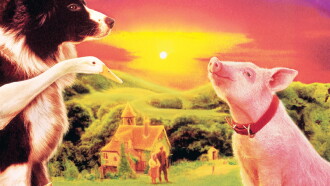
Babe is a little pig who doesn't quite know his place in the world. With a bunch of odd friends, like Ferdinand the duck who thinks he is a rooster and Fly the dog he calls mum, Babe realises that he has the makings to become the greatest sheep pig of all time, and Farmer Hoggett knows it.
A fairy tale set in the bucolic countryside of Central Europe at the turn of the 20th century. Anka, an orphan girl, bravely sets off in the pursuit of a home, facing the hardships of life, and ultimately finds her place with the help of a magical world and its mysterious creatures.
Anne Shirley, an orphan, is fostered by farmer Matthew Cuthbert and his sister Marilla, who were expecting a boy to be sent them to help with their farm work.
The four-inch-tall Clock family secretly share a house with the normal-sized Lender family, "borrowing" such items as thread, safety pins, batteries and scraps of food.
While traveling with his father, young Alec becomes fascinated by a mysterious Arabian stallion that is brought on board and stabled in the ship he is sailing on.
A new orphanage opens near Jill and Joy's house, and a boy named Pekki runs away from there. Pekki ends up living in Jill and Joy's cabin and tells the girls how bleak life is in the orphanage under the strict command of the headmistress Minna Pinna.
Alternative movies trailers for Heidi in the Mountains
More movie trailers, teasers, and clips from Heidi in the Mountains:
Heidi in the Mountains - Portuguese_Português.mpg
Heidi é um desenho animado criado por Isao Takahata e Hayao Miyazaki em 1974 baseado no livro Heidi de Johanna Spyri. [editar]Dobragem Portuguesa ...
Popular movie trailers from 1974
These some of the most viewed trailers for movies released in 1974:
Five friends head out to rural Texas to visit the grave of a grandfather. On the way, they stumble across what appears to be a deserted house, only to discover something sinister within.