The only film about SWAPO, the liberation movement in Namibia. About its civilian and armed struggle against South African occupation and economic oppression. Historical footage depicts the mechanics of colonialism, earlier resistance struggles, and the origins of the current situation. The film has caused a stir internationally. The footage is unique (occasionally smuggled Super-8 film). For instance the film includes a sequence that revealed a South African massacre of 105 people in a Namibian village (the filmmakers have testified before the UN about their experiences). (FilmCentrum Katalog 23, 1988)
South Africa, July 11th, 1963. Several members of the African National Congress, an organization declared illegal, are arrested in Rivonia, a country house near Johannesburg.
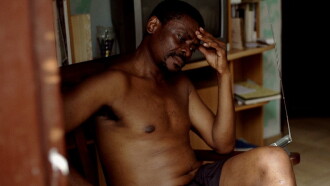
How’s the Big Everything? Garba asks Nicole. For them, the “Big Everything” encompasses family, politics, History, daily life, the stars, small things, and time passing like the wind.
Thousands of royal artifacts of Dahomey, a West African kingdom, were taken by French colonists in the 19th century for collection and display in Paris.
The ruthless dictator Teodoro Obiang has ruled Equatorial Guinea with an iron hand since 1979. Juan Tomás Ávila Laurel is the most translated Equatoguinean writer, but he had to flee the country in 2011, after starting a hunger strike denouncing the crimes of the dictatorship.
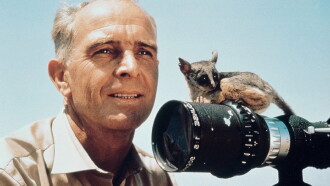
The film tells of the beginnings of the Serengeti National Park in Tanzania. At the end of the 1950s, the Tanzanian National Park Administration wanted to fence in the protected area around the Ngorongoro Crater.
It is an unknown chapter of the German post-war history: On April 23rd, 1949, the kingdom of the Netherlands occupied German soil as a pledge for demanded war reparations.
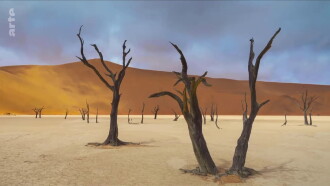
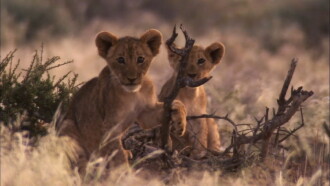
Meet the "Five Musketeers," five inseparable lion brothers raised in the ancient Namib Desert. When they eventually become independent from their mothers, they venture into the desert in search of their own kingdom--a journey fraught with treacherous terrain and conflict.
A musical trip through southern Africa to the tunes of the post-apartheid generation. Kwaito music originated in the 1950's in the dusty streets of South Africa's townships such as Sophiatown, Pimville and subsequently in Soweto.
In Namibia, conservationist Maria Diekmann found herself on the frontline of the battle to save these wanted animals after unexpectedly becoming a surrogate mother to an orphaned baby pangolin named Honey Bun.
John Pilger returns to Vietnam in 1974. America had withdrawn its ground forces at the beginning of the previous year, he reports, yet the war had not ended.
After reading in the newspaper, Úrsulo runs to seek employment. It is the position of caretaker of a luxury apartment building habited by people more heterogeneous: the professional model, the spiritualist, hippies and all turn to him to solve their problems.