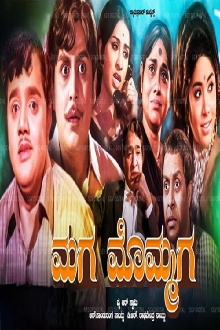
Maga Mommaga is a 1974 Indian Kannada-language film, directed by Y. R. Swamy and produced by R. Panduranga Naidu and D. R. Raghavendra Naidu. The film stars Dwarakish, K. S. Ashwath, Vajramuni and Balakrishna in the lead roles. The film has musical score by M. Ranga Rao.
A novelist fed up with the establishment profiting from "Black" entertainment uses a pen name to write a book that propels him into the heart of hypocrisy and the madness he claims to disdain.
A medical doctor, Ko, has three daughters. The first daughter, Suk-hee, confesses her past when her husband asks her to forgive his past, on the first night of their honeymoon.
A woman and her 10-year-old son face, in their own way, the mourning for the death of the husband and father, which took place in a factory, while the waiting and the recollection for the day of the funeral grow all around.
Dinithi tries very hard to communicate with her husband, but he ignores her presence relentlessly. The harder she tries to reach him, the deeper his silence becomes.
A 13-year-old girl lives in the country with her father and brother. The delicate balance of her inner world is broken by an unexpected visit that forces her to grow.
Portrays the challenges of creating a film about nuclear disaster amid public apathy. It captures behind-the-scenes moments as the crew discusses the gravity of nuclear threats, the importance of preparation, and the emotional impact of a nuclear attack.
The actual Viscount Arnau wants to acquire the power and fame that had their ancestors. For this reason decided to hav many children, preferably males, to revive the Empire.
A short film that originally played before showings of "Heroes Two" - in which Fu Sheng, Chen Kuan Tai and Chi Kuan-Chun demonstrate different techniques of Hung boxing.
Directed by Sam Pillsbury, this 1974 film observes Ralph Hotere — one of New Zealand’s greatest artists — at a moment when excitement is gathering about his work.
A couple of musicians are on their way to a show at a country bar. Along the way, they pick up a couple of sexy hitchhiking ladies and decide to pull over for a pitstop.