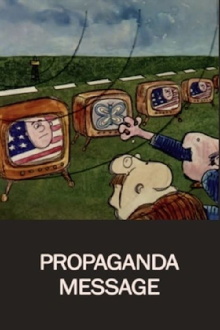
A cartoon film about the whole heterogeneous mixture of Canada and Canadians, and the way the invisible adhesive called federalism makes it all cling together. That the dissenting voices are many is made amply evident, in English and French. But this animated message also shows that Canadians can laugh at themselves and work out their problems objectively.
This short begins with the star canine and his owner Penny in peril from "The Man with the Green Eye", trapped within his fortress protected by overwhelming defenses, tied up and suspended high above a bottomless pit that's surrounded by fire.
Doug and his pal Skeeter set's out to find the monster of Lucky Duck Lake. Though things get really out of hand when some one blurts out that the monster is real.
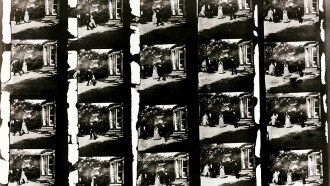
The earliest surviving motion-picture film, and believed to be one of the very first moving images ever created, was shot by Louis Aimé Augustin Le Prince using the LPCCP Type-1 MkII single-lens camera.
The Big Bad Wolf stalks Little Bo Peep and steals one of her sheep. She enlists Little Boy Blue and a dancing scarecrow to assist her and her mischievous black sheep in rescuing it.
Hedda Hopper plays hostess at a party for her (grown) son William (DeWolfe Jr.). Hopper, attends the dedication of the Motion Picture Relief Fund's country home and goes to the Mocambo.
Portrays the challenges of creating a film about nuclear disaster amid public apathy. It captures behind-the-scenes moments as the crew discusses the gravity of nuclear threats, the importance of preparation, and the emotional impact of a nuclear attack.
Following Tung's death in a mysterious plane crash, a police investigator replaces him to investigate the shady dealings of a gang of criminals led by Feng Wei, cousin of the dead.
The actual Viscount Arnau wants to acquire the power and fame that had their ancestors. For this reason decided to hav many children, preferably males, to revive the Empire.
Crafty railroad worker Bart becomes the first Black sheriff of Rock Ridge, a frontier town about to be destroyed in order to make way for a new railroad.
Allied to a four-year Daily Mirror campaign by John Pilger that helped achieve compensation for many of the forgotten and mostly working class victims of the notorious drug prescribed to women during pregnancy.
Comments
Have you watched Propaganda Message yet? What did you think about it?