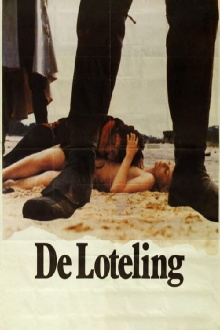
In 1833, when the fledgling Belgian kingdom still fears a Dutch invasion, recruits were selected annually from an age cohort by a draw of lots in each locality. In this grim, then contemporary drama by the 'father of Flemish literature', Hendrik Conscience, Jan Braems, a poor and naive farmers-boy, accepts the not uncommon offer by a rich family to sell his lucky ticket (out) to their son for a hefty sum compared to the miserable labor wages at the time. Army life is even harsher then a farmhand's, especially for a Dutch-speaking an-alphabet who simply can't understand his francophone superiors, and Jan's nature is not complacent enough for military discipline even by todays standards, so he soon gets into all kinds of trouble, including gambling his capital away and a venereal disease. When his girlfriend back home goes looking for him, her life is doomed as well.
A young woman from the Midwest gets more than she bargained for when she moves to New York to become a writer and ends up as the assistant to the tyrannical, larger-than-life editor-in-chief of a major fashion magazine.
From the heights of notoriety to the depths of depravity, John Forbes Nash Jr. experiences it all. As a brilliant but socially awkward mathematician, he made a groundbreaking discovery early in his career and stands on the brink of international acclaim.
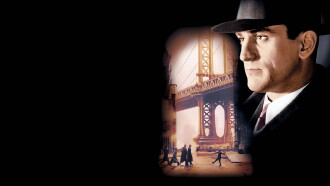
A former Prohibition-era Jewish gangster returns to the Lower East Side of Manhattan over thirty years later, where he once again must confront the ghosts and regrets of his old life.
A petty criminal fakes insanity to serve his sentence in a mental ward rather than prison. He soon finds himself as a leader to the other patients—and an enemy to the cruel, domineering nurse who runs the ward.
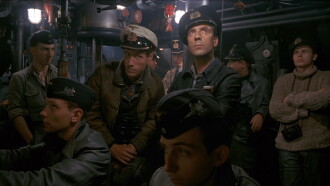
A German submarine hunts allied ships during the Second World War, but it soon becomes the hunted. The crew tries to survive below the surface, while stretching both the boat and themselves to their limits.
In the winter of 1959, a single mother and her young daughter arrive in a rural French town, where they open an unusual chocolate shop that disrupts the moral fiber of the strictly Catholic townsfolk and mayor.
Art film producer Jeremy Prokosch, unhappy with the work of his director, hires Fritz Lang (as himself) to direct an adaptation of The Odyssey, but when it seems that the legendary filmmaker is making a picture destined to bomb, he brings in a screenwriter to energise the script.
Haunted by his mysterious past, a devoted high school football coach leads a scrawny team of orphans to the state championship during the Great Depression and inspires a broken nation along the way.
Popular movie trailers from 1974
These some of the most viewed trailers for movies released in 1974:
Allied to a four-year Daily Mirror campaign by John Pilger that helped achieve compensation for many of the forgotten and mostly working class victims of the notorious drug prescribed to women during pregnancy.
Crafty railroad worker Bart becomes the first Black sheriff of Rock Ridge, a frontier town about to be destroyed in order to make way for a new railroad.