"Two and a half centuries since The Academy set out on its journey…"01 January 1974History, Factual50 mins
The Voronezh Nuclear Power Plant reactor; Novgorod’s archaeological excavations. Archaeologist Boris Rybakov on importance of historical science. Lenin’s Materialism & Empirio-Criticism. The first university dept of natural compound chemistry in the Soviet Union, located in Tashkent, Uzbek SSR. Agriculturalist Pavel Lukyanenko develops winter wheat varieties at Krasnodar Research Institute of Agriculture. French physicist Hubert Curien on USSR–France collaboration in nuclear physics. Foreign members of the USSR Academy of Sciences: Albert Einstein, Max Planck, Niels Bohr; theoretical physicist Igor Tamm on nuclear transformations in planetary & meteoritic matter, study of the Moon in relation to the Earth’s evolution. Dedicated to the 250th anniversary of the founding of the Academy of Sciences. Archival film, photographs, manuscripts, books, interviews from Academy members, explore its role in the development of science, economics, and its prominent figures throughout its history…
On the Puerto Rican diaspora, which includes renowned artists who have converted New York, Florida, Chicago, Hawaii, Santa Cruz and Dominican Republic into their second home, but with Puerto Rico in their hearts.
Tarō Okamoto became world-famous by designing the “Tower of the Sun” at Expo ’70 in Osaka. The ideas and problems that came with its creation, however, are intertwined with the evolution of Japanese culture – from the Paleolithic up until modern times.
What makes European cinema so special? Find out in Paul Joyce’s feature-length documentary, Pictures of Europe, which examines the differences between American independent and Hollywood movies and films from European directors.
This documentary was written with passion and love for cinema, and on the other hand, he blamed her. Our fictional character for this documentary talks about her passion for cinema and how it affected her life and recounts the decades that passed on the cinema one after the other.
In 2001, Jimmy Wales published the first article on Wikipedia, a collaborative effort that began with a promise: to democratize the spreading of knowledge, monopolized by the elites for centuries.
Portrays the challenges of creating a film about nuclear disaster amid public apathy. It captures behind-the-scenes moments as the crew discusses the gravity of nuclear threats, the importance of preparation, and the emotional impact of a nuclear attack.
A collage film, a dialogue between mother and the unborn child, the film can be seen as a personal self-analysis by René Paquot, who dreamily delivers his conflicts with maternal, medical and religious authority.
Allied to a four-year Daily Mirror campaign by John Pilger that helped achieve compensation for many of the forgotten and mostly working class victims of the notorious drug prescribed to women during pregnancy.
Directed by Sam Pillsbury, this 1974 film observes Ralph Hotere — one of New Zealand’s greatest artists — at a moment when excitement is gathering about his work.
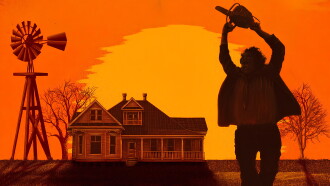
Five friends head out to rural Texas to visit the grave of a grandfather. On the way, they stumble across what appears to be a deserted house, only to discover something sinister within.
Comments
Have you watched The Country and Science yet? What did you think about it?