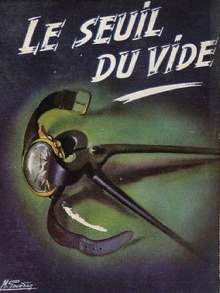
The young artist Wanda Leibovitz comes to Paris, hoping to forget unfortunate love. Soon after arrival directly at the station Wanda meets the mysterious old woman suggesting to rent at it the room (whom the old woman, allegedly, held ready for the now deceased sister). Wanda doesn't know yet that this room will change all her life shortly after it slightly opens a mysterious forbidden door.
The wife of a famous composer survives a car accident that kills her husband and daughter. Now alone, she shakes off her old identity and explores her newfound freedom but finds that she is unbreakably bound to other humans, including her husband’s mistress, whose existence she never suspected.
Michel takes up pickpocketing on a lark and is arrested soon after. His mother dies shortly after his release, and despite the objections of his only friend, Jacques, and his mother's neighbor Jeanne, Michel teams up with a couple of petty thieves in order to improve his craft.
A group of French soldiers, including the patrician Captain de Boeldieu and the working-class Lieutenant Maréchal, grapple with their own class differences after being captured and held in a World War I German prison camp.
Three tales of love, ambition, and neurosis unfold in the city that never sleeps. In "Life Lessons" (Martin Scorsese), a tormented painter channels heartbreak into his art.
In WWII Western Germany, Private David Manning reluctantly leaves behind a mortally wounded fellow soldier and searches for survivors from his platoon, only to learn from commanding officer Captain Pritchett that they have all been killed in action.
During a trip to Denmark, a man is arrested and accused of murdering his wife and three children. Though maintaining his innocence, he remains jailed as police investigate.
On a beach in Nice, François meets the mysterious Peggy and falls in love with her. Following her to a villa, he meets Marc, a lawyer who has a strange relationship with the girl.
Directed by Sam Pillsbury, this 1974 film observes Ralph Hotere — one of New Zealand’s greatest artists — at a moment when excitement is gathering about his work.
Following Tung's death in a mysterious plane crash, a police investigator replaces him to investigate the shady dealings of a gang of criminals led by Feng Wei, cousin of the dead.
Kenan's wife is murdered by five people, and his daughter is sent to a children's home. Kenan kills four of his wife's five murderers, but is sent to prison and sentenced to 20 years.
The actual Viscount Arnau wants to acquire the power and fame that had their ancestors. For this reason decided to hav many children, preferably males, to revive the Empire.