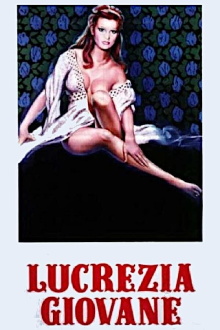
In the early 16th century Italy is ruled by the powerful Borgia family, led by Cesare Borgia and his sister Lucrezia. In a ruthless power play, Cesare plots to have his sister’s husband murdered.
A world of the very near future in which cattle, fish, and even the family pet can be cloned. But cloning humans is illegal - that is until family man Adam Gibson comes home from work one day to find a clone has replaced him.
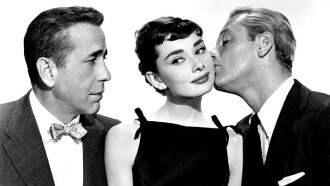
After two years in Paris, chauffeur's daughter Sabrina returns home elegantly transformed and immediately catches the attention of David, the playboy son of her father's rich employers.
In the throes of a zombie apocalypse, a troubled woman from Las Vegas with a dark past finds herself stranded in the desert with a lone and ravenous zombie on her tail.
Maiquél has lost a bet and dyed his hair blond. This seemingly innocuous event triggers a head-on collision with destiny in which he goes from nobody to hero to outlaw — all in 24 hours.
Rio de Janeiro. Confronted with the violence that exists in the favela where he lives, Tiago sees the only way out to become a soccer player and, in this way, help his family to have a better life.
After finding out that her husband, Rudi, has a fatal illness, Trudi Angermeier arranges a trip to Berlin so they can see their children.
Alternative movies trailers for Young Lucrezia
More movie trailers, teasers, and clips from Young Lucrezia:
Lucrezia Giovane 1974
Description.
Lucrezia Giovane (1974) Ending
Lucrezia Giovane Ending. Pope Alexander : we will no longer tolerate their fomenting of scandal around us. the arduous inheritance of the throne of peter asks ...
Simonetta Stefanelli and Raffaele Curi in Lucrezia Giovane (1974)
Young Lucrezia full hd movie trailer.
Popular movie trailers from 1974
These some of the most viewed trailers for movies released in 1974:
A collage film, a dialogue between mother and the unborn child, the film can be seen as a personal self-analysis by René Paquot, who dreamily delivers his conflicts with maternal, medical and religious authority.
Following Tung's death in a mysterious plane crash, a police investigator replaces him to investigate the shady dealings of a gang of criminals led by Feng Wei, cousin of the dead.
On a beach in Nice, François meets the mysterious Peggy and falls in love with her. Following her to a villa, he meets Marc, a lawyer who has a strange relationship with the girl.
A short film that originally played before showings of "Heroes Two" - in which Fu Sheng, Chen Kuan Tai and Chi Kuan-Chun demonstrate different techniques of Hung boxing.
Portrays the challenges of creating a film about nuclear disaster amid public apathy. It captures behind-the-scenes moments as the crew discusses the gravity of nuclear threats, the importance of preparation, and the emotional impact of a nuclear attack.