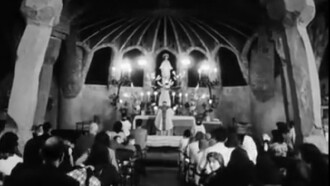
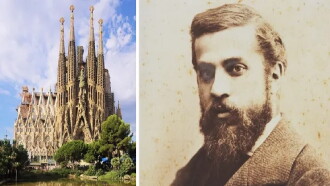
When I first arrived in Barcelona in 1974 I decided to make a film about architect Antoni Gaudi's Park Guell. I found a film already conceived in the 1914 design; it was enough to follow the trajectories traced by Gaudi, imagine them as a labyrinth, reproduce the bursting of the mosaics through an analogous fracture of linear temporality. In the editing I tried to avoid showing passers-by. No human figure should get in the way of the appearance of that fantastic architecture. The stop-motion technique applied to the position and parameters of the camera still seems suitable for representing the undulating space of the park.
David Locke is a world-weary American journalist who has been sent to cover a conflict in northern Africa, but he makes little progress with the story.
Viktor, an architect student from Kyiv, loves Barcelona and the Gaudí work. He wants to get a scholarship in Barcelona, so he’s waiting for a reply from Spanish university.
In 1959 Hiroshi Teshigahara shot the following 16 mm footage of he and his father’s first trip to Barcelona and the outlying Catalonian countryside, including a visit to the home of Salvador Dali in Port Lligat.
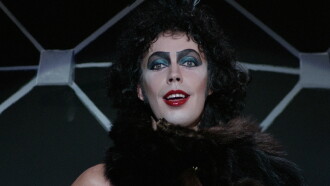
After getting a flat tire in the middle of nowhere, newly engaged couple Brad and Janet encounter the eerie mansion of the flamboyant, seductive Dr Frank-N-Furter and a variety of eccentric characters.
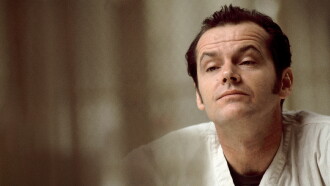
A petty criminal fakes insanity to serve his sentence in a mental ward rather than prison. He soon finds himself as a leader to the other patients—and an enemy to the cruel, domineering nurse who runs the ward.
Richard is a private detective. He makes a good money from marital infidelity: the deceived husband and wife generously paid him for proof of their infidelity "halves".
A married couple, after a life time of work and bringing up a family, retire and awaken to the fast changing world around them, the habitual nature of their relationship, and what they have left.
Neelapponmaan is a 1975 Indian Malayalam film, directed and produced by Kunchacko. The film stars Prem Nazir, KPAC Lalitha, Adoor Bhasi and Sreelatha Namboothiri in lead roles.
Adapted from the novel Die Döppelgänger by Theodor Storm, this black-and-white drama tells the tragic story of a war veteran who, in 1860, returns to his home in Schleswig Holstein after serving a term for robbery.