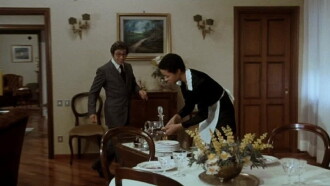
Katja Raganelli was not solely interested in female filmmakers, but women artists in general. This early work offers a portrait of painter-educator-pacifist Anna Ottonie Krigar-Menzel, also known as Annot. Suppressed by the Nazis and forced into exile, it’s tempting to consider Annot a key inspiration for Raganelli, as one of her main works is a late 1920s cycle of paintings called Faces of Working Women, depicting female surgeons, physiotherapists, all manner of women’s labour.
Suffering from insomnia, disturbed loner Travis Bickle takes a job as a New York City cabbie, haunting the streets nightly, growing increasingly detached from reality as he dreams of cleaning up the filthy city.
An extended dream sequence presents a biblical allegory about the creation, downfall and rebirth of humanity, told through a series of surrealistic vignettes and musical numbers.
The title of Truth Through Mass Individuation references Carl Jung. An isolated figure is seen performing successively more aggressive actions — dropping a cymbal among a flock of pigeons, firing a rifle in a deserted city street.
Film in three segments. In the first, father is suspicious about his son's masculinity. The second one shows a Don Juan-like guy who, at church for his own wedding, cannot remember who the bride might be.
The story Peter is telling the about a special summer, when he is invited over to summer holiday from bickering parents, to his aunt and uncle in the country.
Cornélio, an aged man and famous baritone, marries the young Angelica, who plans with her ex-boyfriend Bruno, to kill the husband with contaminated oysters, but she ends up the one who gets sick.
The film is based on the memoirs of partisan commander Peter Kružliak. Lieutenant Peter Kubiš is ordered to move with his unit to the mountains after the fall of Banská Bystrica, where he is to receive further orders.
Comments
Have you watched Annot – Portrait of a Painter and Pacifist yet? What did you think about it?