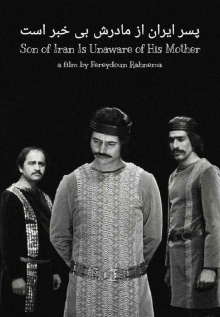
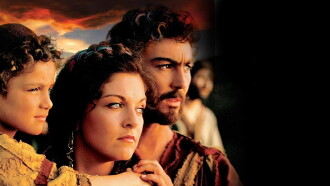
A young playwright and director wants to write and perform a historical drama about faith in the Ashkani period of Iran. There is an incongruity between the man's personal life, and his quest to pursue and present history. The woman who lives with him believes he should not neglect their relationship when embarking on such a quest. The people who work with the playwright believe the play ought to be made popular to satisfy the public. Finally, this matter makes the playwright perform the play all by himself.
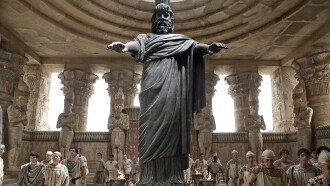
A historical drama set in Roman Egypt, concerning philosopher Hypatia of Alexandria and her relationship with her slave Davus, who is torn between his love for her and the possibility of gaining his freedom by joining the rising tide of Christianity.
The story of an unruly class of bright, funny history students at a Yorkshire grammar school in pursuit of an undergraduate place at Oxford or Cambridge.
The "David and Goliath" legend is presented as credibly as possible, while David's later disastrous romance with Bathsheba is handled with taste and decorum.
Sulan, who works in a factory in the summer of 1978, begins learning photos with other female workers from Seok-yoon, the owner of the photo studio across from the factory.
In a Maori settlement, Ngati Toa leader Te Rauparaha composes the famous chant "Ka Mate", also known as the haka, after evading enemy capture by hiding in a kumara pit.
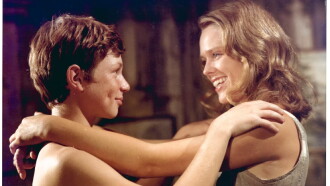
The story Peter is telling the about a special summer, when he is invited over to summer holiday from bickering parents, to his aunt and uncle in the country.
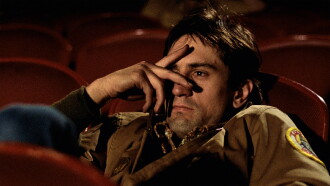
Suffering from insomnia, disturbed loner Travis Bickle takes a job as a New York City cabbie, haunting the streets nightly, growing increasingly detached from reality as he dreams of cleaning up the filthy city.
Episode from the documentary series Paraskinio, dedicated to Mimis Fotopoulos, who speaks about his life and work in a monologue in front of the camera, likely improvised.
Lola Reyes is a singer who is succeeding and, therefore, is besieged by everyone. A group of homosexuals are the only ones authorized by his possessive mother to be her friends.
The film is based on the memoirs of partisan commander Peter Kružliak. Lieutenant Peter Kubiš is ordered to move with his unit to the mountains after the fall of Banská Bystrica, where he is to receive further orders.
The film revolves around the manin protagonist Meenakshi (K. R. Vijaya), who rises from an ordinary housewife to become a Mayor and the trials and tribulations she face to maintain a balance at work and at home.
Film in three segments. In the first, father is suspicious about his son's masculinity. The second one shows a Don Juan-like guy who, at church for his own wedding, cannot remember who the bride might be.
Comments
Have you watched Iran's Son is Unaware of His Mother yet? What did you think about it?