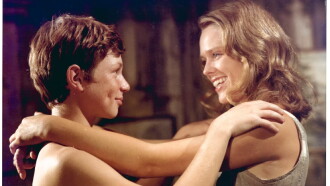
The short film is based on an investigation by Dino Buzzati. It tells the story of Melinda, a mountain girl turned into a witch by her environment and circumstances. In September 1965, Buzzati travelled to Abruzzo (near Teramo, at the foot of the Gran Sasso) on behalf of the newspaper Corriere della Sera, seeking stories for his investigative series titled "I misteri d'Italia" (The Mysteries of Italy). There, he gathered the story of Melinda, a real-life woman (who died in 1962 at the age of 93) regarded by the local community as the last true Abruzzese witch. Buzzati described Melinda not as an evil being, but as a woman victimized by fate and superstition. While Buzzati was fascinated by the magical and mysterious aspects of her tale, Lù Leone reinterpreted the same story in 1976 through a political and feminist lens.
Shere Hite’s 1976 bestselling book, The Hite Report, liberated the female orgasm by revealing the most private experiences of thousands of anonymous survey respondents.
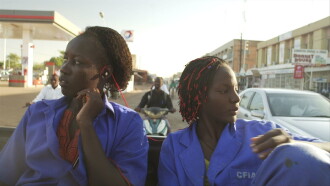
A group of young women from Ouagadougou study at a girl school to become auto mechanics. The classmates become their port of safety, joy and sisterhood, all while they are going through the life changing transition into becoming adults in a country boiling with political changes.
A Woman's Place is the first film about the UK women's liberation movement. Crockford and her co-producers Ellen Adams and Tony Wickert document the movement's first national conference and march and examine its demands.
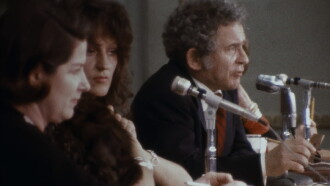
On the evening of April 30, 1971, a standing room only audience of local literati and feminists packed New York City’s Town Hall to watch Norman Mailer, who had just written “The Prisoner of Sex,” grapple with a panel of passionate feminists.
The life of Sara Winter - former Brazilian feminist and founder of FEMEN in Brazil - told by herself; since the troubled youth, through the years of prostitution and feminist militance, until the discovery of motherhood and God.
Considered one of Canada's most important women artists of the second half of the 20th century, Joyce Wieland's art embodies the essence of her homeland, feminism, and ecology.
Shut Up and Sing is a documentary about the country band from Texas called the Dixie Chicks and how one tiny comment against President Bush dropped their number one hit off the charts and caused fans to hate them, destroy their CD’s, and protest at their concerts.
Rocky Balboa is a Philadelphia club fighter who seems to be going nowhere. But when a stroke of fate puts him in the ring with a world heavyweight champion, Rocky knows that it's his one shot at the big time — a once-in-a-lifetime opportunity to go the distance and come out a winner!
The story Peter is telling the about a special summer, when he is invited over to summer holiday from bickering parents, to his aunt and uncle in the country.
Cornélio, an aged man and famous baritone, marries the young Angelica, who plans with her ex-boyfriend Bruno, to kill the husband with contaminated oysters, but she ends up the one who gets sick.
A passionate telling of the story of Sada Abe, a woman whose affair with her master led to an obsessive and ultimately destructive sexual relationship.
Comments
Have you watched Melinda strega per forza yet? What did you think about it?