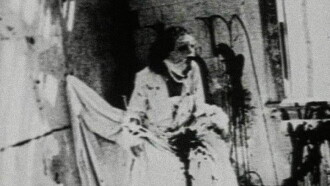
Scher made this in 1976 as a student at Bard College. He printed it to negative years later and liked the way it looked better than the now faded original film.
This found footage film is about how easy it is to get lost both physically and emotionally within a short amount of time and how hard it may be to come back to where you were or simply coming to terms with change.
Spectrum and prism divide the screen; whites and light, etc. "Out of this purity comes all colors. I've always been attracted to refracted light and prismatic phenomena" says Bernard.
Letter carrier Eva is in her late twenties, unmarried and the mother of a twelve-year-old son. She falls in love with Jon, a bargeman who is unfortunately already engaged.
A passionate telling of the story of Sada Abe, a woman whose affair with her master led to an obsessive and ultimately destructive sexual relationship.
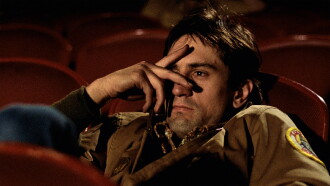
Suffering from insomnia, disturbed loner Travis Bickle takes a job as a New York City cabbie, haunting the streets nightly, growing increasingly detached from reality as he dreams of cleaning up the filthy city.
Lola Reyes is a singer who is succeeding and, therefore, is besieged by everyone. A group of homosexuals are the only ones authorized by his possessive mother to be her friends.
The title of Truth Through Mass Individuation references Carl Jung. An isolated figure is seen performing successively more aggressive actions — dropping a cymbal among a flock of pigeons, firing a rifle in a deserted city street.
Comments
Have you watched NYC yet? What did you think about it?