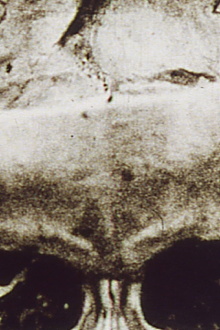
"In the final format for MAGELLAN, Frampton had planned to disassemble these two films into twenty-four 'encounters with death' that were to be shown in five-minute segments twice a month. In their present state, seen together and roughly the length of an average feature film, the two parts of MAGELLAN: AT THE GATES OF DEATH constitute perhaps the most gripping, monumental, and wrenching work ever executed on film...Frampton in 1971 began his filming of cedavers at the Gross Anatomy Lab at the University of Pittsburgh. He returned to the lab four times over the course of the next two years and then spent nine months assembling his 'forbidden imagery' into an extraordinary meditation upon death."–Bruce Jenkins
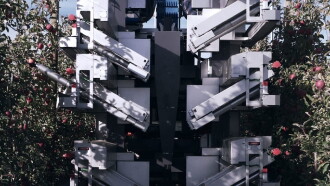
An interconnected look at tradition, colonialism, property, faith, and science, as seen through labor practices that link an endangered salamander, mass-produced apples, and the evolving fields of genomics and machine learning.
This short, started early on into sobriety, finished about nine months in, is a collage of diaries and notes, collected from within addiction and into recovery.
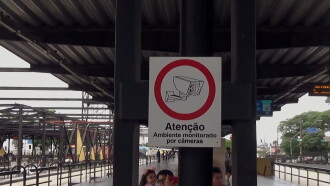
A film essay that intertwines the director's gaze with that of her late mother. Beyond exploring mourning and absence as exclusively painful experiences, the film pays tribute to her mother through memories embodied by places and objects that evidence the traces of her existence.
Kalú Kariú, a trans artist and poet from northern Brazil, reflects on how “saudade”, an untranslatable feeling of profound nostalgic longing, becomes a powerful source of creation.
X-ray images were invented in 1895, the same year in which the Lumière brothers presented their respective invention in what today is considered to be the first cinema screening.
Ellie Epp’s 12-shot study of a soon-to-be-demolished public bath in London, which “maps another way out of structural film toward a cinema of delicate implication".
Popular movie trailers from 1976
These some of the most viewed trailers for movies released in 1976:
Rocky Balboa is a Philadelphia club fighter who seems to be going nowhere. But when a stroke of fate puts him in the ring with a world heavyweight champion, Rocky knows that it's his one shot at the big time — a once-in-a-lifetime opportunity to go the distance and come out a winner!
In post-Civil War Kentucky, young David Burnic becomes the unexpected heir to the family secret, a map leading to buried treasure on the Florida isle of Matecumbe.
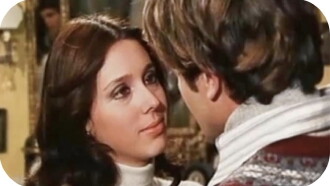
Cornélio, an aged man and famous baritone, marries the young Angelica, who plans with her ex-boyfriend Bruno, to kill the husband with contaminated oysters, but she ends up the one who gets sick.
Lola Reyes is a singer who is succeeding and, therefore, is besieged by everyone. A group of homosexuals are the only ones authorized by his possessive mother to be her friends.
Comments
Have you watched The Red Gate: Magellan at the Gates of Death, Part I yet? What did you think about it?