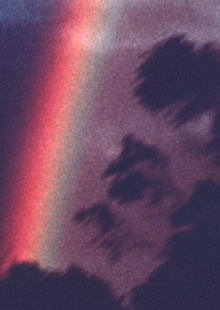
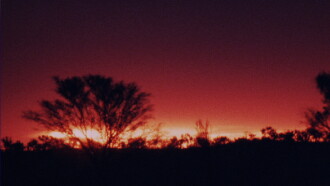
Ayers Rock is examined in the light of its ancient human and animal associations. It is seen under various light effects which create different colour and texture impressions. The timelessness of the monolith is suggested by negative colour, the result of using fine-grain Eastmancolour print stock in the camera, a slow speed material which required the intense Central Australian light for adequate exposure. A half-speed recording of the local bird call and insects contributes to the sense of cross eras. Human perception of time, colour and sound is questioned. As Einstein said: 'The distinction between past, present and future is only an illusion, even if a stubborn one.'
Shot mostly at Uluru, the rock in the heart of Australia. The extreme heat damaged the emulsion of the film which is subsequently incised by the filmmaker.
As the camera moves gently from afar into the very heart of the monolith, the magic of the holiest site of the Aborigines unfolds in shimmering nuances of light.
The life and death of the fictional star Wilma Montesi is reported in the form of a staged newsreel. Excerpts from films of various genres and eras are juxtaposed with "documentary material" about the star's public and private life.
Chakravarthy, Ranjith and Prakash are childhood friends. Problems arise when Ranjith suspects Chakravarthy and Prakash to be behind the rape attempt on his wife.
Babae...Ngayon at Kailanman is a film adaptation of three Filipino short story masterpieces: Nick Joaquin's "May Day Eve", Amador Daguio's "Wedding Dance" and Wilfrido Nollega's "Juego de Prenda.
Avant-garde appeal on behalf of and made by the adventurous leftist London cinema, The Other Cinema, using the facilities provided by the BBC community programme unit.
The good guys, a trio of swordsmen, gradually collect allies, including one by marriage. The groom must depart along with his bride but she must pass 3 tests before leaving.
a time-lapse glimpse of the Madison, WI skyline from dusk to dark. Shot from within a hotel room, the street traffic and the reflected interior interpenetrate in gradually shifting superimposition.
Comments
Have you watched At Uluru yet? What did you think about it?