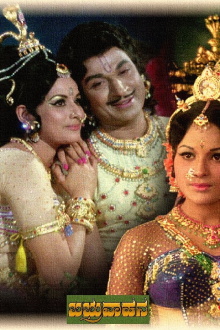
Babhruvahana, like Arjuna at the beginning of the Kurukshetra war, faces a moral dilemma. Can he risk harming his parents? While Chitarangada alerts Arjuna to shoot an arrow at their son and take advantage of Babhruvahana’s momentary lapse due to a sense of devotion towards them (as Arjuna did with Karna), Uluci, the Naga princess and yet another abandoned wife of Arjuna’s, reminds Babhruvahana of the teaching of the Kurukshetra battle that in the battlefield there is no space for feelings even towards parents. What Babhruvahana must do is to establish his mother’s good name and thereby his own character. This film captures this conflict spectacularly. The eerie parallels with the moral dilemmas of the great Mahabharata battle aside, here all the familial relationships (in particular, strong mothers and dutiful sons) become exaggerated and demand our attention.
True story of the undersized Depression-era racehorse whose victories lifted not only the spirits of the team behind it but also those of their nation.
Khaila Richards, a crack-addicted single mother, accidentally leaves her baby in a dumpster while high and returns the next day in a panic to find he is missing.
Set during the Rodney King riots, a robbery homicide investigation triggers a series of events that will cause a corrupt LAPD officer to question his tactics.
Three generations of a family gather over a weekend. The sisters Sanne and Heidi have accepted their terminally-ill mother’s desire to die before her disease worsens; but, as the weekend progresses, their mother's decision becomes harder and harder to deal with, and old conflicts come to the surface.
In the 15th century, Richard, Duke of Gloucester, aided by his club-footed executioner Mord, eliminates those ahead of him in succession to the throne, then occupied by his brother, King Edward IV of England.
Told from the POV of Black Beauty himself, his birth and perception of humans are explored, but his first owner, a boy named Joe, is his most memorable.
Alternative movies trailers for Babruvahana
More movie trailers, teasers, and clips from Babruvahana:
Babruvahana | ಬಬ್ರುವಾಹನ | Kannada Full Movie | Dr.Rajkumar | B.Saroja Devi | Historical Movie
Watch & Devi playing lead role from the film Babruvahana Also *ing Kanchana and JayamalaThoogudeepa SrinivasVajramuni and ...
Yaaru Tiliyaru Ninna | Best Song With Dialogue Scene from BABRUVAHANA
Watch the Yaaru Tiliyaru Ninna Song With Dialogue scene from the film Babruvahana .Staring Dr Raj Kumar B Sarojadevi Kanchana and Others.
Yaru Tiliyaru Song From Babruvahana – ಬಬ್ರುವಾಹನ|Kannada | Feat. Dr Rajkumar B Sarojadevi
Watch Dr Rajkumar playing lead role from the film Babruvahana . Also staring B Sarojadevi Kanchana and Others. Film: BABRUVAHANA Director: HUNSUR ...
Babruvahana – ಬಬ್ರುವಾಹನ|Climax Fighting Scene | FEAT. Dr Rajkumar B Sarojadevi
Watch the climax fight scene from the film Babruvahana .Staring Dr. Rajkumar B Sarojadevi Kanchana and Others.
Aaradhisuve Madanaari Song From Babruvahana – ಬಬ್ರುವಾಹನ Kannada Movie | Dr Rajkumar B Sarojadevi
Watch Dr Rajkumar playing lead role from the film Babruvahana . Also staring B Sarojadevi Kanchana and Others. Film: BABRUVAHANA Director: HUNSUR ...
Popular movie trailers from 1977
These some of the most viewed trailers for movies released in 1977:
In a kingdom, there lives a widowed king and his capricious and wayward daughter Jitka. One day, the king gets lost while hunting and meets a mysterious old woman and her beautiful daughter.
The good guys, a trio of swordsmen, gradually collect allies, including one by marriage. The groom must depart along with his bride but she must pass 3 tests before leaving.
Chakravarthy, Ranjith and Prakash are childhood friends. Problems arise when Ranjith suspects Chakravarthy and Prakash to be behind the rape attempt on his wife.
Avant-garde appeal on behalf of and made by the adventurous leftist London cinema, The Other Cinema, using the facilities provided by the BBC community programme unit.
Encouraged by the stories of guest workers who pay visit to their homeland, a young man Filip finds himself on a central station in Frankfurt on the Main, Germany.
After an encounter with UFOs, an electricity linesman feels undeniably drawn to an isolated area in the wilderness where something spectacular is about to happen.
Pete, a young orphan, runs away to a Maine fishing town with his best friend a lovable, sometimes invisible dragon named Elliott! When they are taken in by a kind lighthouse keeper, Nora, and her father, Elliott's prank playing lands them in big trouble.