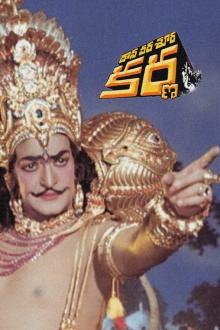
"Generous, heroic, and valiant Karna"02 November 1977Drama, Music226 mins
A retelling of Mahabharata through the perspectives of KARNA and DURYODHANA. The film uses dialogue and poetry written in Classical Telugu/ Grandhika Basha.
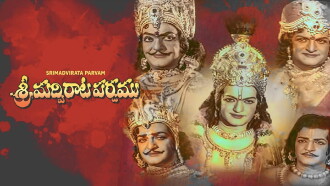
It is an Epic story based on the book Virata Parva of Mahabharatha. After 12 years of Vanavasam, the Pandavas spend their 13th year of exile the Agnaadhavasam in an incognito state with disguised identities at the court of Virata.
In the year 2898 AD, around 6000 years after Kurukshetra war, Ashwatthama gears up for his final battle of redemption at the sign of hope in a dystopian world and Bhairava, a wisecracking and self-interested bounty hunter, tired of the perilous life becomes the hurdle in the process.
The film depicts the adolescent age of the Pandavas and Krishna and shows the events in the Mahabharata, focusing on the later chapters of Adi Parva and the first half of Sabha Parva.
Balarama promises Subhadra that he'll marry his daughter to her son. But when the Pandavas lose their kingdom to the Kauravas, Balarama breaks his promise.
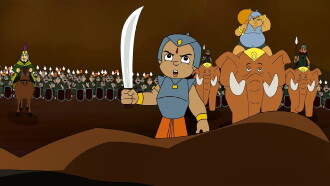
About 500 years ago, the five kingdoms around Dholakpur joined together to end Kirmada`s rule. Now a mysterious force has brought him back from the dead.
Popular movie trailers from 1977
These some of the most viewed trailers for movies released in 1977:
Don Diego goes to war and his son Don Gonzalo is, in his absence, the new lord of the region. The milling Elvira, one of the mistresses of Don Diego, has a beautiful daughter, Elena, who has the desire of Don Gonzalo.
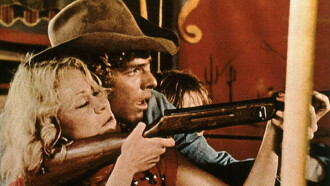
Two fun-loving carnival workers take a vacation with the hope of finding plenty of sex and drugs. Their "quest" is fulfilled when they encounter a dope-peddler and two exotic nightclub dancers.
The good guys, a trio of swordsmen, gradually collect allies, including one by marriage. The groom must depart along with his bride but she must pass 3 tests before leaving.
First-time father Henry Spencer tries to survive his industrial environment, his angry girlfriend, and the unbearable screams of his newly born mutant child.
Comments
Have you watched Daana Veera Soora Karna yet? What did you think about it?