Tribute to the Druze Kamal Jumblatt, Minister of Economy and Agriculture (1946) and founder of the Progressive Socialist Party (PSP) in 1949. He was one of the architects of the departure of President Bechara el-Khoury (1952), before playing a major role in the events of 1958. From 1960 to 1964, Kamal Jumblatt assumed, under the presidency of Fouad Chehab, various ministerial functions . . After the conflict of June 1967, he gradually approached the Palestinian organizations. In 1969 he became Minister of the Interior; in August 1970, he supported the election of Soleiman Frangié as President of the Republic. Following the Lebanese-Palestinian clashes of May 1973, he took sides against the head of state, established himself as the leader of the National Movement in 1975 and engaged in a revolutionary armed struggle against the Lebanese Front. Hostile to Syria's intervention in Lebanon, he broke with it (March 1976). He was assassinated near a Syrian checkpoint in 1977.
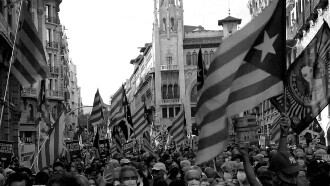
Obsessively referring to the traumas and wounds that the Spanish civil war (1936-39) and Franco's dictatorship (1939-75) caused in their day no longer serves to explain the impassable abyss of incomprehension and hatred that the abject policies and radical positions adopted by both the right and the left in recent decades have opened up before the citizens of a country that is barely known beyond hackneyed cultural clichés.
A film director from Israel interviews fellow veterans of the 1982 invasion of Lebanon to reconstruct his own memories of his term of service in that conflict.
A documentary about the 8-day sit-in struggle by GANG Cheolmin, a 22 year-old private in the South Korean army who declared his objection to military service on November 21, 2003 in order to stop the South Korean government from sending troops to Iraq, and the peace groups supporting him.
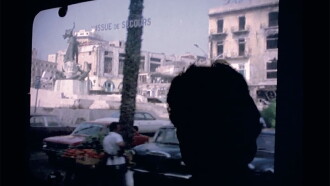
Letter from Beirut documents the filmmaker's return to Beirut during one of the lulls, three years after the outbreak of the civil war, animated by the urge to return.
Yallah! Underground follows some of today’s most influential and progressive artists in Arab underground culture from 2009 to 2013 and documents their work, dreams and fears in a time of great change for Arab societies.
Is it possible to talk about death in war time? This question is exposed through four people who lost friends and relatives in four different Lebanese regions.
WINE and WAR is a documentary about one of the the oldest winemaking regions on earth and the resilience of the Lebanese entrepreneurial spirit seen through the lens of war and instability.
To the Least of My Brothers and Sisters is a new documentary on the life of Jerome Lejeune, the Father of Modern Genetics that was made to celebrate the 20th anniversary of his death.
While living in a deserted valley in eastern Lebanon, seven-year-old Rahaf describes the wonders of her past, present and future – without knowing the limits of her own imagination.
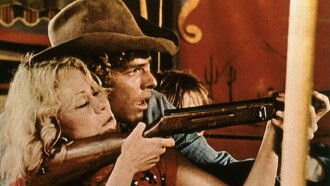
Two fun-loving carnival workers take a vacation with the hope of finding plenty of sex and drugs. Their "quest" is fulfilled when they encounter a dope-peddler and two exotic nightclub dancers.
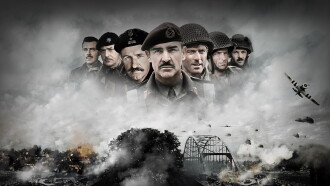
The story of Operation Market Garden—a failed attempt by the allies in the latter stages of WWII to end the war quickly by securing three bridges in Holland allowing access over the Rhine into Germany.