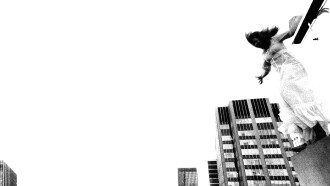
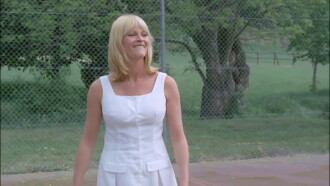
The film explores the phenomenon of when two things are perceived at the same time – as when two images combine in a double exposure. There is an ambiguity in their hierarchy. They might be perceived apart, joined together, one after the other, or one dominates the other out completely. This ‘relationship’ is what I am intuitively exploring. Film sees the unconscious neither as rational, or irrational. Film is a system of relations.” — E.B. 1977
Love has packed up and left the castle. The queen has snuck back to her Kingdom of Skedaddle. But one person’s loss is a scoundrel’s gain: Bonifacio, a teller of tall tales, sees in the forlorn queen the perfect target for his hackneyed charms.
Some game trolls in the United States make a sport of getting other players “swatted” live during the game: they find out someone’s name and address, fake his caller ID, and make a bogus 911 call.
First-time father Henry Spencer tries to survive his industrial environment, his angry girlfriend, and the unbearable screams of his newly born mutant child.
The life and death of the fictional star Wilma Montesi is reported in the form of a staged newsreel. Excerpts from films of various genres and eras are juxtaposed with "documentary material" about the star's public and private life.
Babae...Ngayon at Kailanman is a film adaptation of three Filipino short story masterpieces: Nick Joaquin's "May Day Eve", Amador Daguio's "Wedding Dance" and Wilfrido Nollega's "Juego de Prenda.
Four men from different parts of the globe, all hiding from their pasts in the same remote South American town, agree to risk their lives transporting several cases of dynamite (which is so old that it is dripping unstable nitroglycerin) across dangerous jungle terrain.
Avant-garde appeal on behalf of and made by the adventurous leftist London cinema, The Other Cinema, using the facilities provided by the BBC community programme unit.