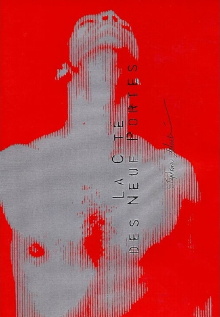
Filmmaker and teacher, Stéphane Marti has been researching experimental cinema as an art form liberated of aesthetic codes and the economics of big budget cinema. His work is primarily focused on the themes of the sacred and the human body. An avid supporter of the Super-8 format, he has been fighting for its merits as a tool. He has used this format film after film and has been sharing his experiences with new filmmakers during his workshops at the Sorbonne’s College of the Arts (Paris I).
After getting a flat tire in the middle of nowhere, newly engaged couple Brad and Janet encounter the eerie mansion of the flamboyant, seductive Dr Frank-N-Furter and a variety of eccentric characters.
In the nineteenth century, a French adventurer sets off to establish a kingdom in the inhospitable South of Chile, uniting the feared Mapuche under him.
Hoping to find a sense of connection to her late mother, Gorgeous takes a trip with her friends to visit her aunt's ancestral house in the countryside.
CREMASTER 2 is rendered as a gothic Western that introduces conflict into the system. On the biological level it corresponds to the phase of fetal development during which sexual division begins.
This four-volume boxset released by Image Forum compiles the breadth of Shuji Terayama's experimental short film work into an extensive DVD collection.
This is the only feature directed by the famed French painter and sculptor Martial Raysse. In keeping with the revolutionary spirit of the time, the movie has no plot to speak of and appears to have been largely made up on the spot.
Chakravarthy, Ranjith and Prakash are childhood friends. Problems arise when Ranjith suspects Chakravarthy and Prakash to be behind the rape attempt on his wife.
In a kingdom, there lives a widowed king and his capricious and wayward daughter Jitka. One day, the king gets lost while hunting and meets a mysterious old woman and her beautiful daughter.