Investigates the issue of capital punishment by focusing on six death row inmates and the circumstances of the 13 murders they committed independently. The inmates include Earl Isaacs, who murdered six members of the rural Alday family; Henry Jarrette; Roy Wayne Isaacs; and others. The documentary features interviews with the condemned men, the men's relatives, and the relatives of the victims. By presenting these accounts and discussions on the deterrent effect and concept of just punishment with "no questioning, no cross-examination, no real conclusions," the film allows the viewer to assess the human dimensions and complexities of the death penalty debate.
We do not know when and how we will die. Death Row inmates do. Werner Herzog embarks on a dialogue with Death Row inmates, asks questions about life and death and looks deep into these individuals, their stories, their crimes.
A documentary film about Martta Koskinen, the last executed woman in Finland during the war in 1943. Martta was a Seamstress who lived in Helsinki during the Second World War.
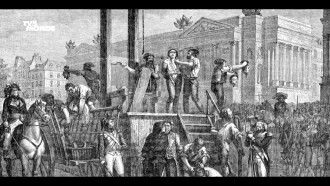
Forty years after the abolition of the death penalty in France, voted on September 18, 1981, the guillotine remains in the collective imagination as the instrument of the death sentence.
What would your family reminiscences about dad sound like if he had been an early supporter of Hitler’s, a leader of the notorious SA and the Third Reich’s minister in charge of Slovakia, including its Final Solution? Executed as a war criminal in 1947, Hanns Ludin left behind a grieving widow and six young children, the youngest of whom became a filmmaker.
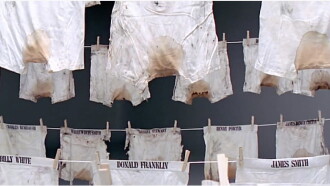
A film about convicted drug smuggler Myuran Sukumaran, who became an accomplished artist before he was executed by firing squad in Indonesia in April 2015.
British documentarian Nick Broomfield creates a follow-up piece to his 1992 documentary of the serial killer Aileen Wuornos, a highway prostitute who was convicted of killing six men in Florida between 1989 and 1990.
This documentary recounts the dysfunctional state of the death penalty in the state of California by revisiting the crimes, arrest, trials and appeals of Lawrence Bittaker, a convicted serial killer who has been on death row at San Quentin since 1981.
Today, the ritual of giving the last supper to the condemned person has been detached from its origin, and can be perceived to be as absurd as the punishment it accompanies.
Depicts the case of religious persecution suffered by the Christian Pakistani Asia Bibi (Aasiya Noreen), falsely accused of blasphemy in 2010 by a Pakistani court and was sentenced to death by hanging.
The good guys, a trio of swordsmen, gradually collect allies, including one by marriage. The groom must depart along with his bride but she must pass 3 tests before leaving.
Encouraged by the stories of guest workers who pay visit to their homeland, a young man Filip finds himself on a central station in Frankfurt on the Main, Germany.
Don Diego goes to war and his son Don Gonzalo is, in his absence, the new lord of the region. The milling Elvira, one of the mistresses of Don Diego, has a beautiful daughter, Elena, who has the desire of Don Gonzalo.
Pete, a young orphan, runs away to a Maine fishing town with his best friend a lovable, sometimes invisible dragon named Elliott! When they are taken in by a kind lighthouse keeper, Nora, and her father, Elliott's prank playing lands them in big trouble.
Comments
Have you watched Murder One yet? What did you think about it?