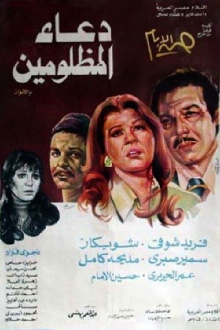
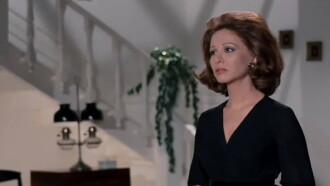
Manar marries a wealthy man while she is in a relationship with Medhat. He sends her letters in the name of Nabila, her brother Sharaf's wife, but divorces her when he gets his hands on one of them. He suspects his paternity of Mervat and hands her over to a teacher who runs a pickpocket den.
When her stepfather tries to rape her, Amal kills him and flees. She finds refuge in the house of the fine artist Ahmed Khaled who falls for her, but his protégé, the sculptor Sherif, also falls for her and competes with Ahmed to win her favor.
Set in 1881, a year before the start of British colonial rule, it is based on the true story of the Abd el-Rasuls, an Upper-Egyptian clan that had been robbing a cache of mummies they have discovered at tomb DB320 near the village of Kurna, and selling the artifacts on the black market.
Hanan works as a secretary for Shawkat, a businessman who trades in weapons. Despite being watched by the police and constant attacks from the journalist Samia, Shawkat steals Hanan from her fiancé, Ahmed, who works in an Arab country.
This movie revolves around the story of an innocent girl (Nawal) who was married to a rich and possessive man who still wants her back after their divorce; however she meets a hair stylist (Shoukry) and falls in love with him.
Avant-garde appeal on behalf of and made by the adventurous leftist London cinema, The Other Cinema, using the facilities provided by the BBC community programme unit.
Don Diego goes to war and his son Don Gonzalo is, in his absence, the new lord of the region. The milling Elvira, one of the mistresses of Don Diego, has a beautiful daughter, Elena, who has the desire of Don Gonzalo.
Encouraged by the stories of guest workers who pay visit to their homeland, a young man Filip finds himself on a central station in Frankfurt on the Main, Germany.
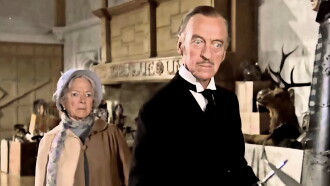
When ex-con artist Harry claims that a secret treasure is hidden inside Candleshoe, an English estate, he creates an elaborate plan to find and steal the prize.
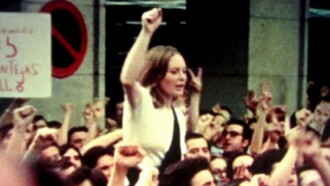
How does a country go from a dictatorship to a democracy? A detailed report on the political representation in the heart of the Spanish Transition, only a few months after General Franco’s death, when the sincere democratic vocation of Spanish people must effort to destroy, one heavy brick after another, the wall that those who supported the dictatorship and those who fought it from the exile built with resentment, hatred and prejudices.
Chakravarthy, Ranjith and Prakash are childhood friends. Problems arise when Ranjith suspects Chakravarthy and Prakash to be behind the rape attempt on his wife.