Pyramid Drawings opens with a white screen and a narrow floor area at the bottom. From the left, a performer enters, carrying a bucket of paint. The film is in negative therefore everything light is dark and everything dark is light. The performer begins to draw black lines on what appears to be a white wall. The drawing gradually becomes to be a pyramid seen in perspective. The performer leaves and the drawing is left for contemplation by the viewer. The performer re-enters with a pair of scissors and cuts what appeared to be lines. The lines fall to the floor. The performer then commences to build a new pyramid with new strings stretched back and forth in the space.
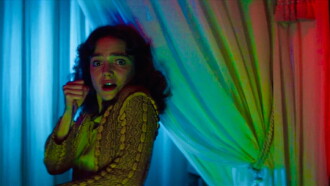
An American newcomer to a prestigious German ballet academy comes to realize that the school is a front for something sinister amid a series of grisly murders.
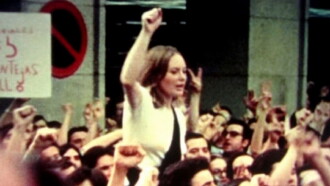
How does a country go from a dictatorship to a democracy? A detailed report on the political representation in the heart of the Spanish Transition, only a few months after General Franco’s death, when the sincere democratic vocation of Spanish people must effort to destroy, one heavy brick after another, the wall that those who supported the dictatorship and those who fought it from the exile built with resentment, hatred and prejudices.
First-time father Henry Spencer tries to survive his industrial environment, his angry girlfriend, and the unbearable screams of his newly born mutant child.
Encouraged by the stories of guest workers who pay visit to their homeland, a young man Filip finds himself on a central station in Frankfurt on the Main, Germany.
In a kingdom, there lives a widowed king and his capricious and wayward daughter Jitka. One day, the king gets lost while hunting and meets a mysterious old woman and her beautiful daughter.
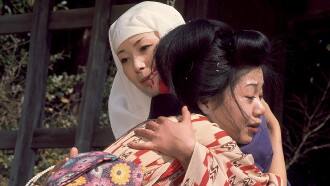
Babae...Ngayon at Kailanman is a film adaptation of three Filipino short story masterpieces: Nick Joaquin's "May Day Eve", Amador Daguio's "Wedding Dance" and Wilfrido Nollega's "Juego de Prenda.