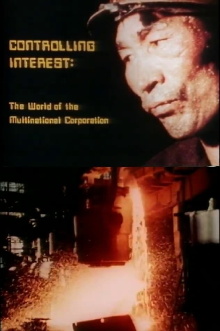
"The Growth of Conglomerates and Their Influence on Global Affairs"01 January 1978Factual46 mins
The first account on film of the growth of multinational corporations, their impact on people at home and abroad, and their influence on U.S. foreign policy. This is the film that helped kick-off the anti-globalization movement. Upon release, it quickly became a standard "audio-visual text" for those concerned about the growing impact of multinational corporations on global affairs. The film examines how the ever-increasing concentration and velocity of capital affect employment in the U.S., shape patterns of development in the Third World, and influence our nation's foreign policy.
Just days before Bernard Madoff captured headlines as the largest Ponzi schemer in U.S. history, Marc Dreier, a prominent Manhattan attorney, was arrested for orchestrating a massive fraud scheme that netted hundreds of millions of dollars from hedge funds.
With a magical new invention that promised to revolutionize blood testing, Elizabeth Holmes became the world’s youngest self-made billionaire, heralded as the next Steve Jobs.
Humanity’s ascent is often measured by the speed of progress. But what if progress is actually spiraling us downwards, towards collapse? Ronald Wright, whose best-seller, “A Short History Of Progress” inspired “Surviving Progress”, shows how past civilizations were destroyed by “progress traps”—alluring technologies and belief systems that serve immediate needs, but ransom the future.
Since the late 18th century American legal decision that the business corporation organizational model is legally a person, it has become a dominant economic, political and social force around the globe.
Part documentary, part expose, this film follows one-time child evangelist Marjoe Gortner on the "church tent" Revivalist circuit, commenting on the showmanship of Evangelism and "the religion business", prior to the start of "televangelism".
2025, the year of the intensification of a total and deadly war, which nothing and no one seems able to stop, targeting military personnel and civilians, and which has now claimed more than 1.
Sandi Hardingm, the manager of the world's last remaining Blockbuster - located in Bend, OR, reflects on the store's vibrant past and navigates the difficult task of keeping a video rental store open in the era of streaming.
When a group of young DIY artists in Santa Fe can’t find a door into the art world, they blow open an entirely new portal with their grit, passion, and tenacity.
One year has passed since Max and Wanda got their divorce. Max has come to the realization that he wants his ex-wife back - no matter what the cost! So he concocts a sneaky plan: he asks Wanda to hide him from the police, who are apparently looking for him.
Angelo Mao, Judy Lee and Barry Chen star in this tale of murder, intrigue and betrayal. When two separate imperial agents stay in the same room at different times are both offed, foul play is afoot.
Carmen is a beautiful woman working in a business that is dedicated to smuggling. One day, Carmen fights and hurts to a smuggler woman, so a sergeant in the National Guard, José Navarro, stops detain her.
The Billion Dollar Bubble is a 1976 film made for the BBC series Horizon and directed by Brian Gibson about the story of the two billion dollar insurance embezzlement scheme involving Equity Funding Corporation of America.
Comments
Have you watched Controlling Interest yet? What did you think about it?