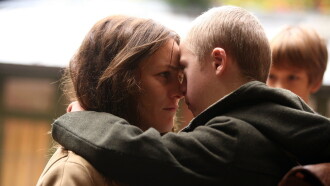
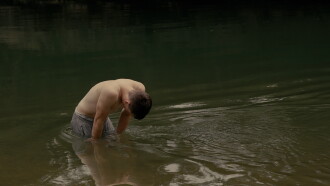
Elisabeth and Massimo have been separated for two years and decide to affirm their independence with a divorce. The person who suffers the most from the situation is their son Marco, who normally lives with his father in a beautiful, but lonely country house. Marco's only satisfaction comes from riding his horse Socrates around the countryside, but Massimo sends the horse to his father-in-law in Sicily when, tired of solitude, he decides to sell everything and move into town. At this point, Marco, who has by chance witnessed the kidnapping and release of Gilberto, decides to flee and pretend he has been kidnapped to gain his parents' attention. His journey to Sicily, where his maternal grandfather lives near Ragusa, is crammed full of adventures, but the child makes it in the end, thanks to Rocco, a Neapolitan street urchin, who befriends him.
The film tells a story of a divorced couple trying to raise their young son. The story follows the boy for twelve years, from first grade at age 6 through 12th grade at age 17-18, and examines his relationship with his parents as he grows.
Jacqueline is a young mother living in 1960s Paris with her disabled son Laurent. Abandoned by her husband, Jacqueline sacrifices everything to care for her son and vows to give Laurent a “normal” life full of happiness.
One year after the tragic death of his best friend, an eighteen-year-old machinist struggles with the split of his parents and the violent way of life surrounding him.
Popular movie trailers from 1978
These some of the most viewed trailers for movies released in 1978:
Dead Eye and his gang are terrorizing a small Chinese region. Chan Ling and his group of misfit friends take it upon themselves to stop evildoers by learning the Super Kung Fu style.
The Black Contribution – Literature and Theater 1978 is a rare documentary highlighting the voices and cultural impact of African American writers and performers during the civil rights era.
Navendhu Kumar lives a poor lifestyle with his handicapped father, Mohan, housewife mom, two unmarried sisters, Leela and Rajni, a younger brother, Kundan, and a sweetheart in Meena.
The plot takes place in the revolutionary year of 1848. It takes us to Príbelice, where Janko Kráľ returns from Pest after the March Revolution, to acquaint the Slovak people with the famous Twelve Points, together with his friend, teacher Ján Rotarides.
Angelo Mao, Judy Lee and Barry Chen star in this tale of murder, intrigue and betrayal. When two separate imperial agents stay in the same room at different times are both offed, foul play is afoot.
Carmen is a beautiful woman working in a business that is dedicated to smuggling. One day, Carmen fights and hurts to a smuggler woman, so a sergeant in the National Guard, José Navarro, stops detain her.